











When Hayat Market opened its first branch in April 2020, it quietly began a journey that would transform how Somalis understood retail. At the time, Mogadishu’s economy was marked by resilience but also fragmentation. Families bought rice from one vendor, cooking oil from another, household items from a roadside stall, and clothing from yet another trader. The lack of consistency meant that prices fluctuated daily, product quality was uncertain, and shopping often felt like a stressful bargain rather than an uplifting experience.
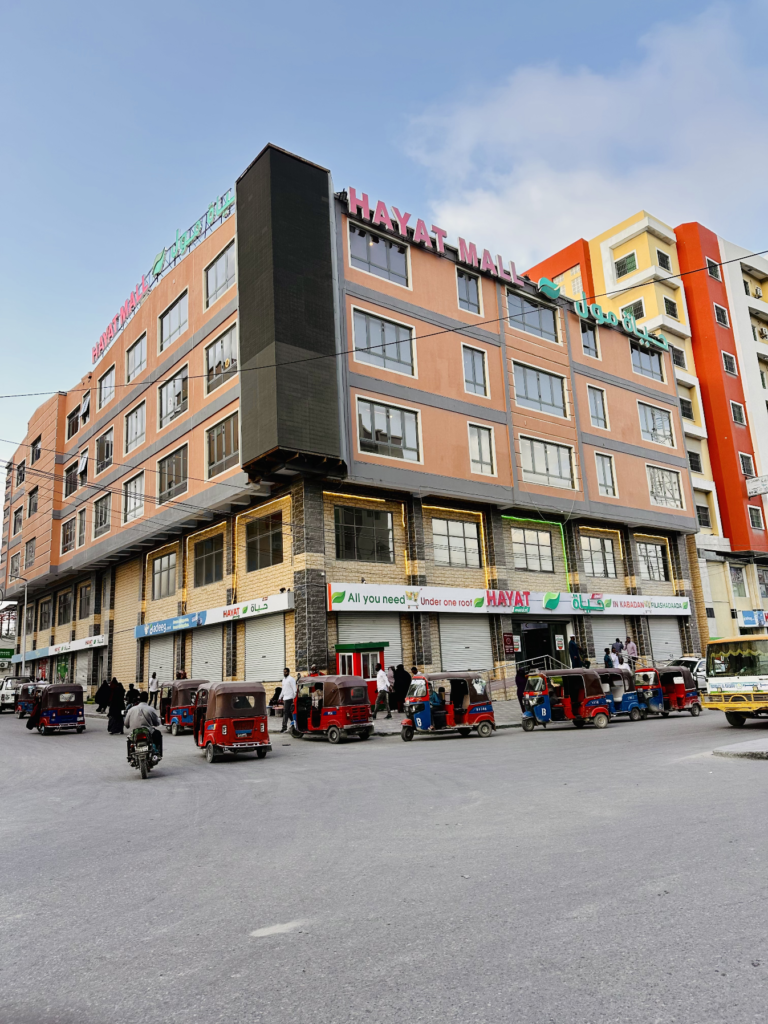
“Hayat Market — a symbol of Somalia’s retail renaissance and a new face of community-centered commerce.”
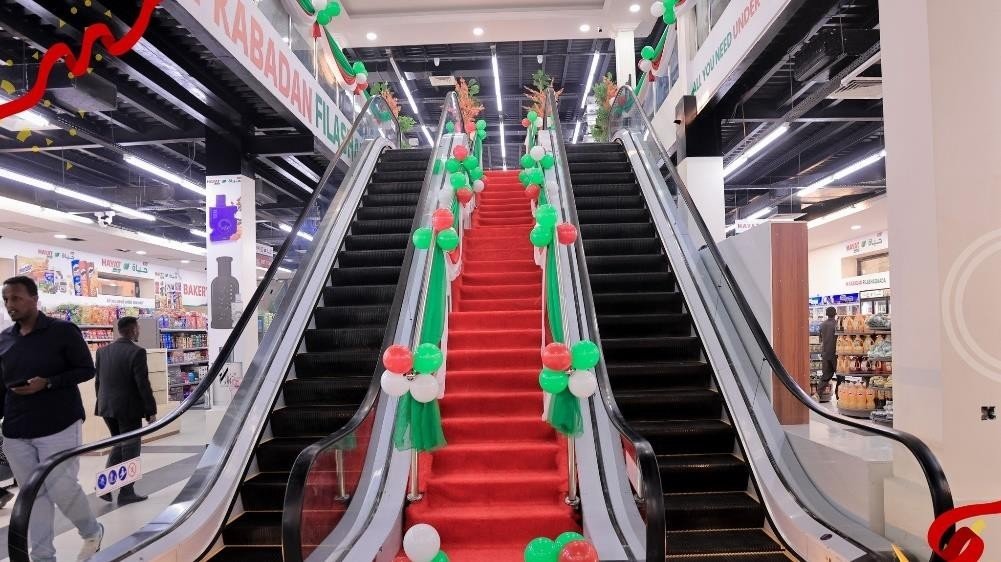
Into this environment stepped Hayat — not simply a supermarket, but a bold vision. The founders believed that Somalia deserved a retail institution that was modern, organized, and dignified. They wanted to create more than a store; they wanted to create a space of pride where families could shop with confidence, where workers could build careers, and where communities could thrive around an anchor of stability.
Today, just a few years later, the results are visible in every corner of Mogadishu. Walk through KM4 Taleh, where Hayat’s flagship store stands and the transformation is undeniable. Streets that once struggled with potholes are now paved and lined with small cafes and shops benefiting from the increased foot traffic. Solar-powered lights brighten the roads at night, making evening shopping safer and more enjoyable. Families stroll together, children in hand, while vendors selling Somali tea and snacks thrive from the crowds Hayat attracts.
What began as a retail idea has become a movement of community transformation. Hayat has reshaped neighborhoods, created jobs, revitalized infrastructure, and elevated the standard of Somali commerce. It is no exaggeration to say that Hayat Market is now more than a supermarket; it is an institution of national pride.
A Vision Rooted in People (CEO)
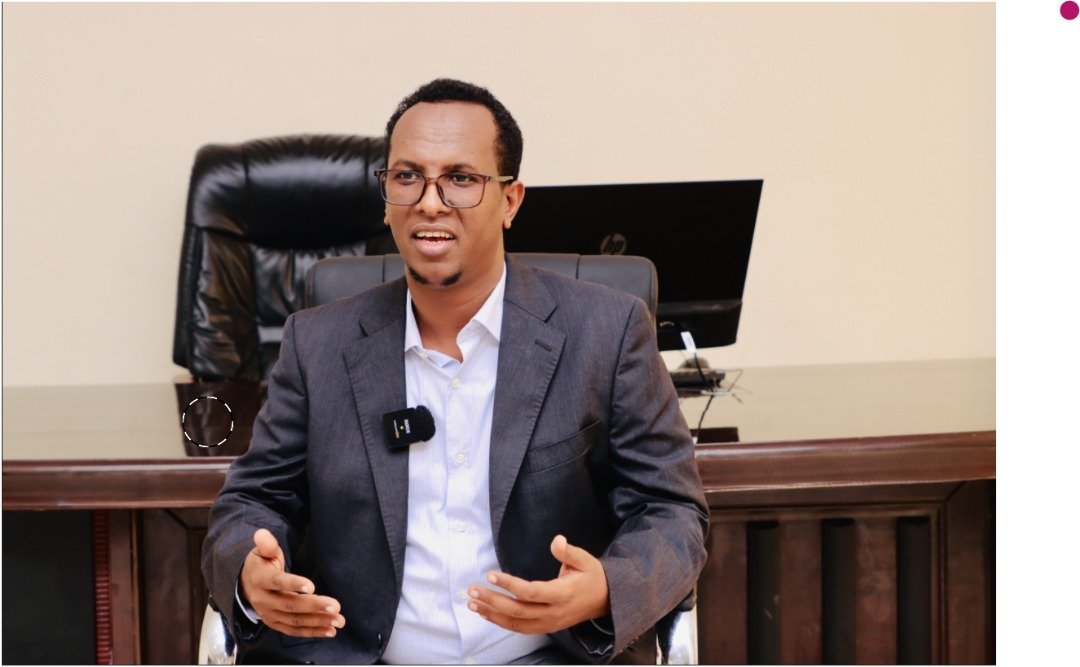
At the heart of this transformation is a leadership team that understands the role of business in society. In an exclusive reflection, the Chief Executive Officer of Hayat Market Mr. Abdinor Gutale explained the driving force behind the company’s philosophy:
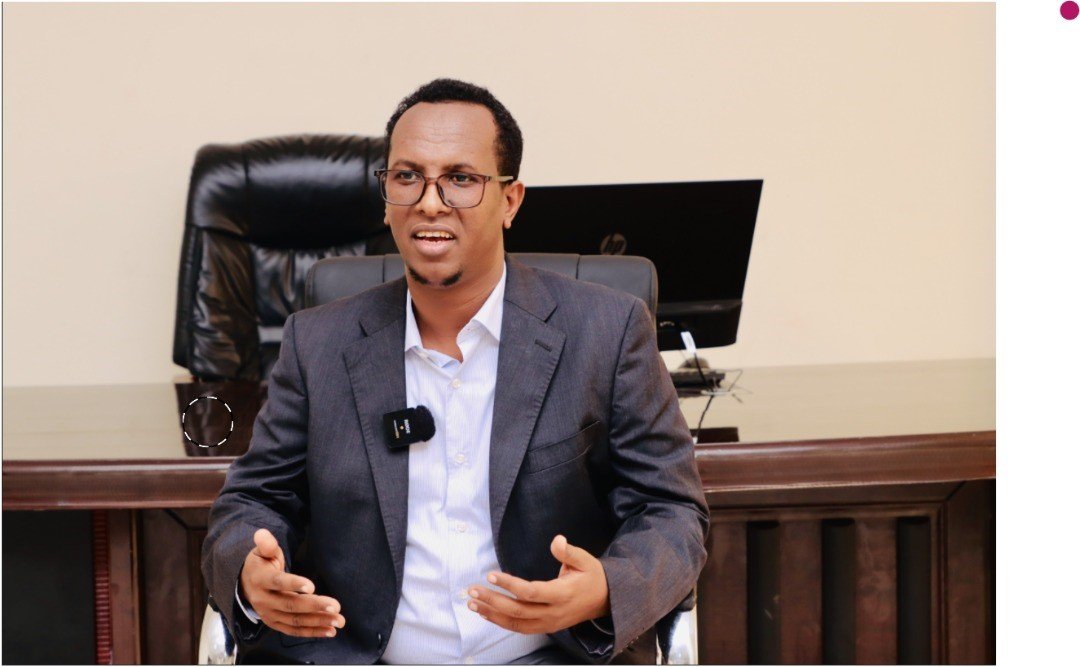
“We built Hayat on a simple belief — that business must serve people, not the other way around. Every store we open is not just about sales; it’s about dignity, pride, and progress for Somali families. We want Hayat to be a place where our people see the best of what Somalia can achieve. If our employees feel empowered, if our farmers feel valued, if our communities feel proud — then Hayat has succeeded.”
The CEO’s words underline an essential truth: Hayat’s rise is not only a business achievement, but a social mission. It is about proving that Somali-led enterprises can deliver world-class standards while uplifting communities at the same time. This philosophy is what makes Hayat more than a commercial venture — it is a model of people-first development that could inspire businesses across East Africa.
“Hayat Market — a symbol of Somalia’s retail renaissance and a new face of community-centered commerce.”
Commerce with Integrity —Redefining Somali Retail
For decades, the Somali shopping experience was defined by uncertainty. Families would set out with shopping lists but often had to move between several small vendors to get what they needed. Prices were rarely fixed, and bargaining could stretch for minutes or even hours. A shopper might find rice at one stall, flour at another, sugar at a third, and cooking oil from a fourth. Some items would be fresh, others not. The result was a retail environment that, while resilient, left consumers without a sense of stability, trust, or dignity in their purchases.
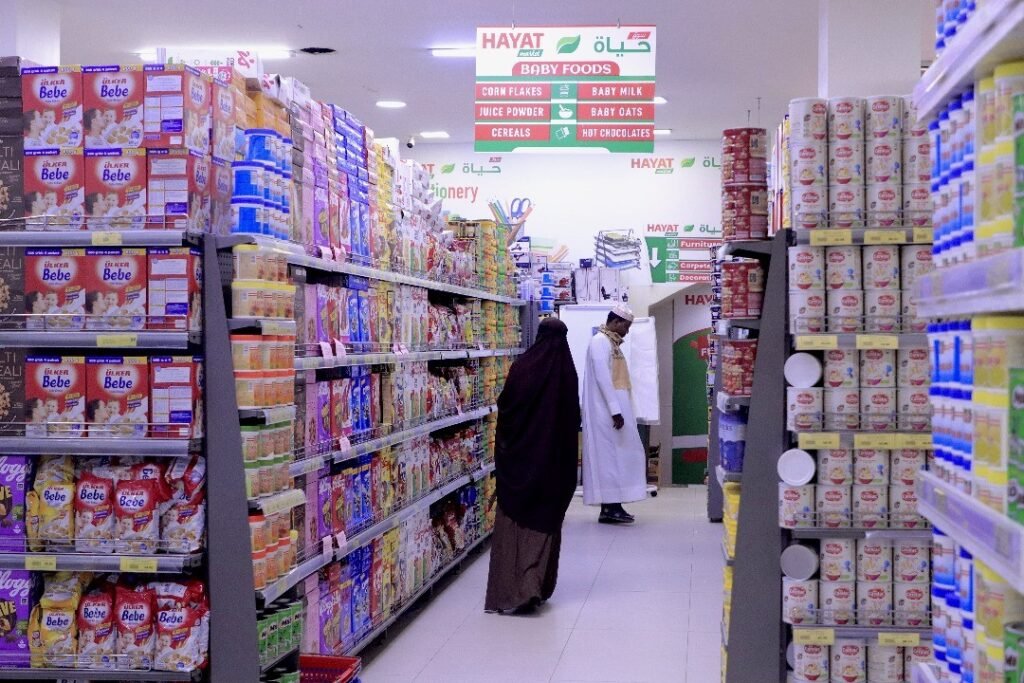
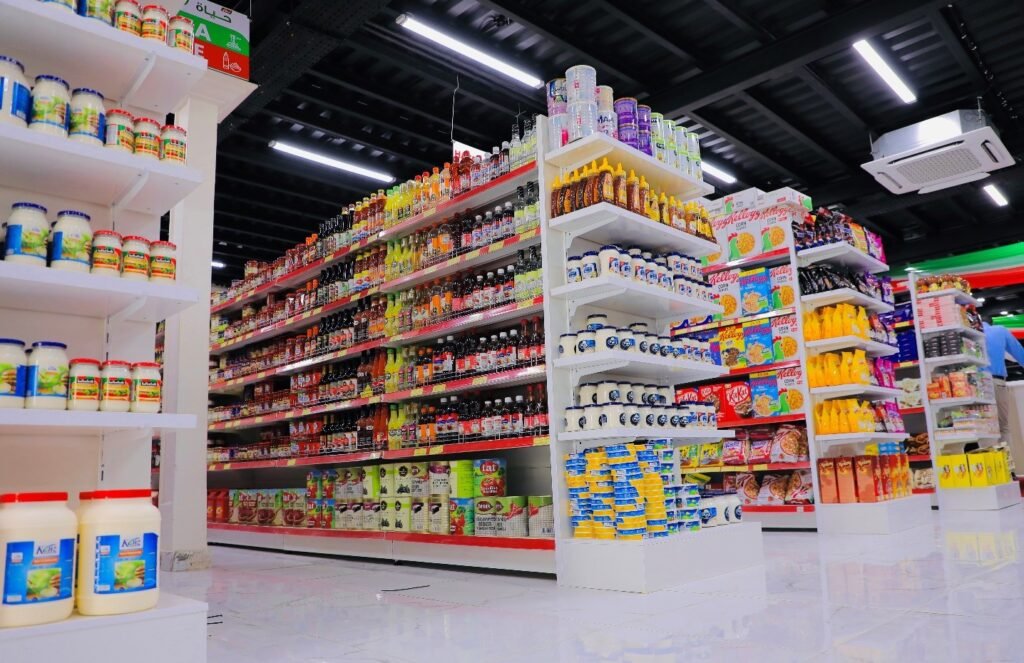
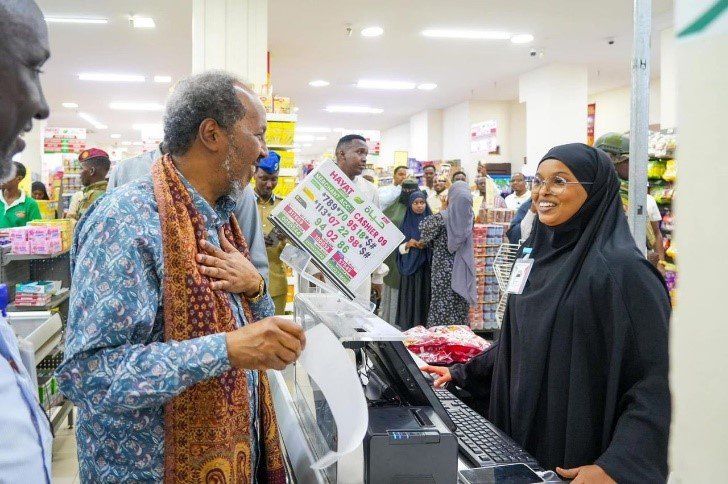
Hayat Market turned that entire model on its head. Walking into a Hayat branch today is to experience a new kind of Somalia. Brightly lit aisles stretch in orderly rows, shelves stocked with everything from daily essentials to international imports. Fresh produce is displayed with care, dairy and meats are kept in refrigerated sections, and dry goods are neatly packaged and labeled. Gone are the days of questioning freshness or worrying about overpricing; clear price tags ensure transparency, while digital payment systems at the checkout counters remove the stress of disputes.
However, what makes Hayat truly different is not just the products on its shelves, but the atmosphere it creates. The stores are air-conditioned, providing relief from the city’s heat and staff greet customers with warmth and professionalism. Families no longer rush in and out of markets; they linger, confident that the environment is clean, safe, and welcoming.
This is retail as a form of dignity. For the first time in Somalia, customers are not treated as mere buyers, but as valued members of a community space. Shopping becomes not just an errand but also a positive social experience, one that contributes to a sense of national pride.

Customers have noticed the difference: put it simply: “When I come to Hayat, I feel like I am stepping into the Somalia we dream about: organized, clean, and full of possibility. It gives me confidence in my country’s future.” These words echo the sentiment of thousands who now view Hayat not just as a retailer but also as a representation of progress itself.
Countrywide Impact — Building an Economic Engine
The influence of Hayat Market goes far beyond the walls of its stores. Every brightly lit aisle and every stocked shelf is the visible face of a much larger ecosystem — one that stretches from farms in the fertile valleys of Lower Shabelle to transport hubs, packaging workshops, and the hands of workers across Mogadishu.
At the most direct level, Hayat has created over 1000 formal jobs across its branches, logistics network, and support operations. These jobs include cashiers, stock clerks, cleaners, managers, drivers, and warehouse staff — many of whom are young Somalis entering the formal workforce for the first time. In a country where youth unemployment is among the highest in the world, these opportunities represent not just income but dignity, structure, and hope for the future.
Yet the impact extends even further. For Somali farmers, Hayat has become a lifeline of stability. In the past, farmers harvested their crops without certainty that they would be able to sell them. Some lost entire seasons of produce due to lack of buyers or sudden price drops. Hayat changed that dynamic by signing consistent purchasing agreements with local producers.
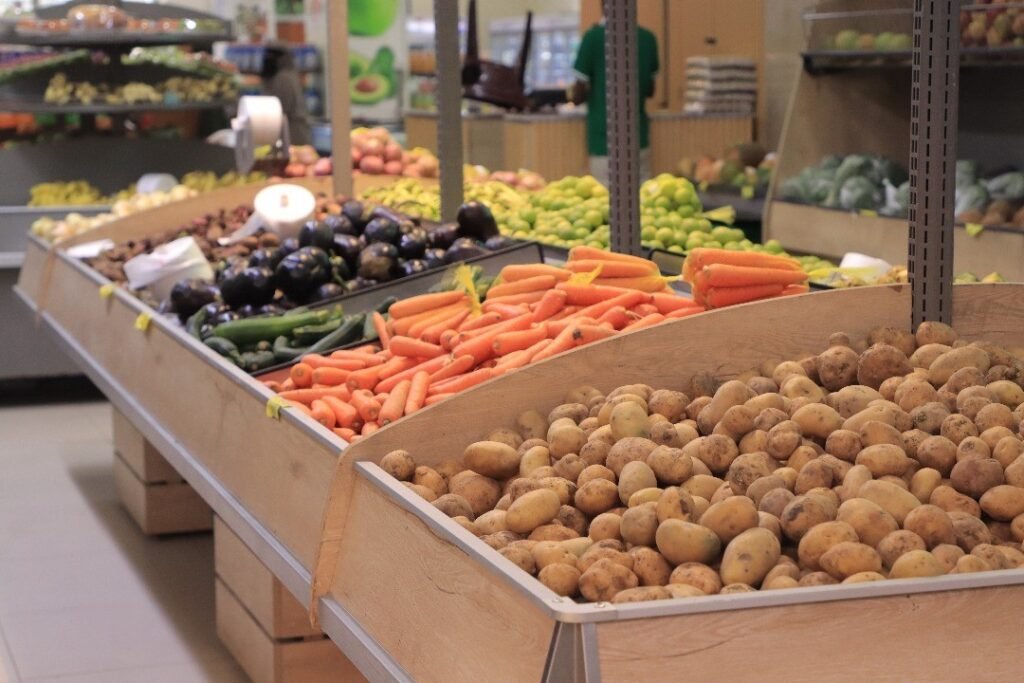
These contracts have allowed farmers to plan, invest in better tools, and expand their operations. Youth in rural areas now find work on farms that are growing to meet Hayat’s demand. The ripple effect of this stability is enormous: more income for households, more school fees paid on time, more goods purchased in local shops, and stronger rural communities overall.
Beyond farming, Hayat stimulates a network of suppliers in packaging, distribution, and transport. Truck drivers ferry goods from rural regions to the city; small businesses package items for Hayat’s shelves; and utility companies provide the energy and services that keep operations running smoothly. Every shilling spent at Hayat circulates through this ecosystem, multiplying in value as it sustains countless livelihoods.
Hayat also provides a stabilizing influence on prices. In a region where inflation and fluctuating supply chains often hurt consumers, the supermarket has maintained steady pricing on essential goods, ensuring that families can afford their daily needs without fear of sudden spikes.
This is why economists often refer to Hayat as more than a retailer — it is an economic engine, one that fuels growth, supports families, and strengthens Somalia’s fragile but rising middle class.
“From farm to shelf Somali farmers now have guaranteed markets through Hayat’s consistent sourcing.
Human Stories — Changing Lives Beyond the Checkout
Numbers tell an important part of Hayat Market’s story — the jobs created, the suppliers supported, the branches opened. However, behind those statistics are people whose lives have been changed in quiet yet profound ways. Step into the aisles of any Hayat branch, and you will find stories of transformation written not in spreadsheets, but in human experience.

Across its branches, Hayat has developed a human resource policy that prioritizes diversity, empowerment, and long-term development. Young people entering the workforce for the first time, women seeking stable and dignified employment, and individuals from different backgrounds are welcomed into an environment designed to nurture skills, confidence, and career progression. Training, mentorship, and internal promotion are not exceptions at Hayat; they are part of a deliberate system that treats employees as partners in growth rather than temporary labor.
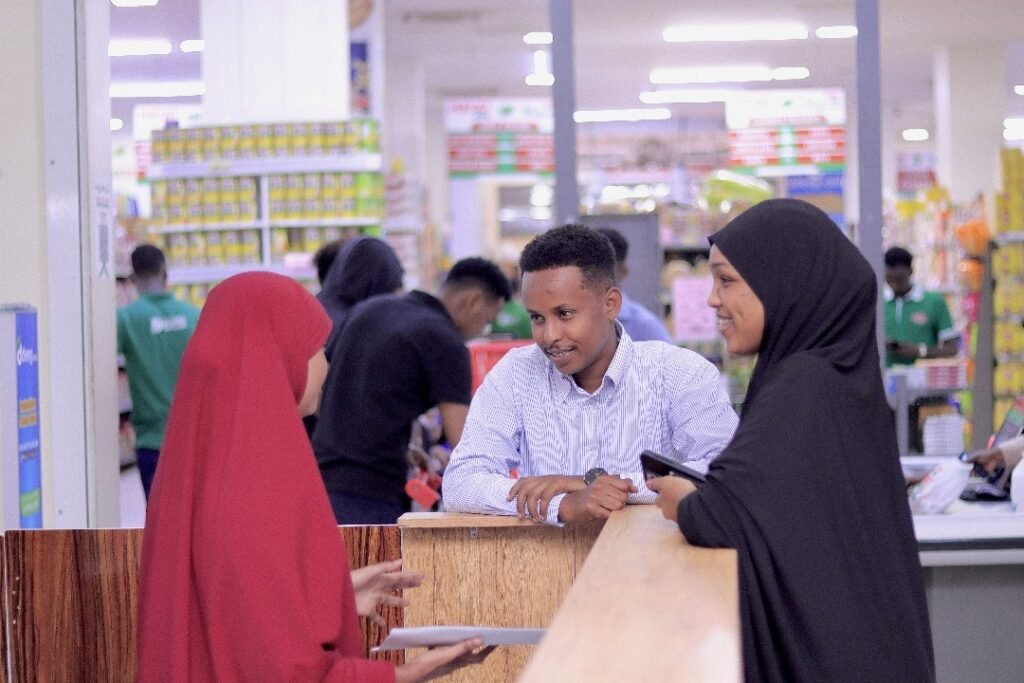
Step into any Hayat store and the human impact becomes visible. Cashiers mastering digital systems, supervisors guiding teams with confidence, and logistics staff managing complex operations all reflect a workplace where learning and responsibility go hand in hand. For many employees, Hayat is more than a job — it is a first step toward independence, stability, and professional identity.
Hassan Mohamoud, Human Resource Manager at Hayat Market, underscores this philosophy:
“Our human resource policy is built on inclusion and empowerment. We believe diversity strengthens our company, and when people are given equal opportunity, training, and respect, they grow with the organization. At Hayat, we are not just filling positions — we are investing in people and building future leaders.”
Through this people-first approach, Hayat Market has created a workplace that reflects the society it serves — diverse, resilient, and full of potential. In doing so, it has proven that modern retail success is not only measured in profits or expansion, but in the lives uplifted along the way.
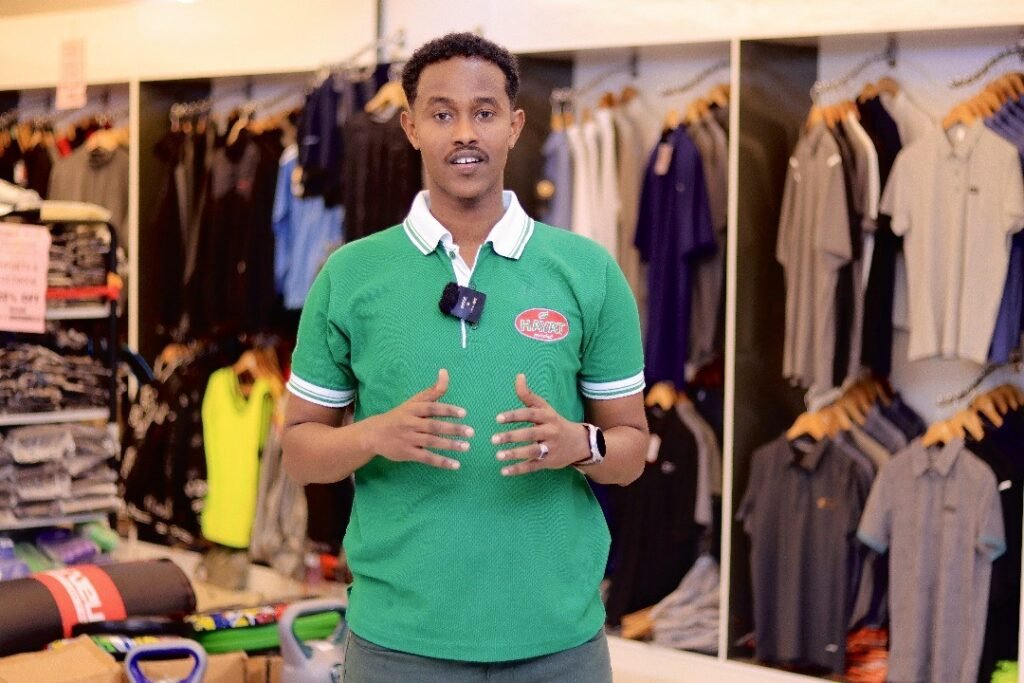
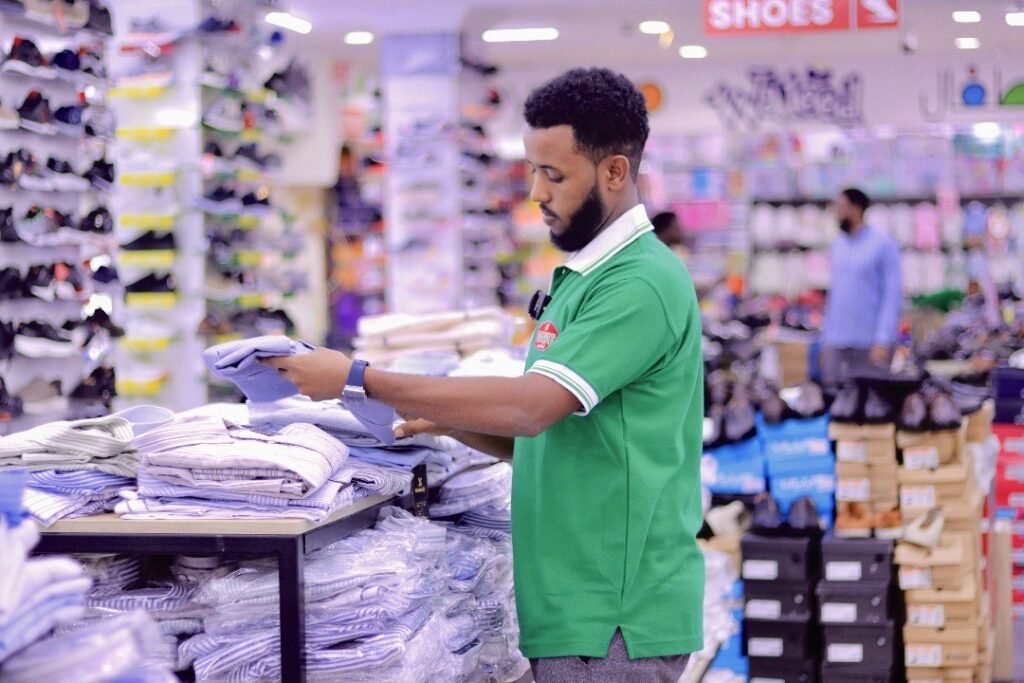
Take Abdullahi Ali, a young man who joined Hayat as a sales associate two years ago. For Abdullahi, this was his first formal job. He remembers walking into his interview nervous and unsure, but leaving with a sense of possibility.
“Hayat trained me from the ground up,” he said with a proud smile. “I learned customer service, inventory systems, and even how to manage a team. Today, I help support my family, and I feel like I’m building a future for myself.”
These voices of employees, community leaders, and mothers show how Hayat’s influence goes far beyond commerce. It is a force that uplifts, empowers, and restores dignity in daily life.
For many, Hayat is not just a place to shop, but a place that symbolizes the Somalia they aspire to — modern, inclusive, and hopeful. Each paycheck given to a young cashier, each smile on a mother’s face as she buys groceries, each neighborhood lit and made lively by Hayat’s presence adds another layer to the human story of progress.
“Behind every transaction, there is a human story of empowerment, dignity, and transformation.”
Infrastructure and Urban Renewal
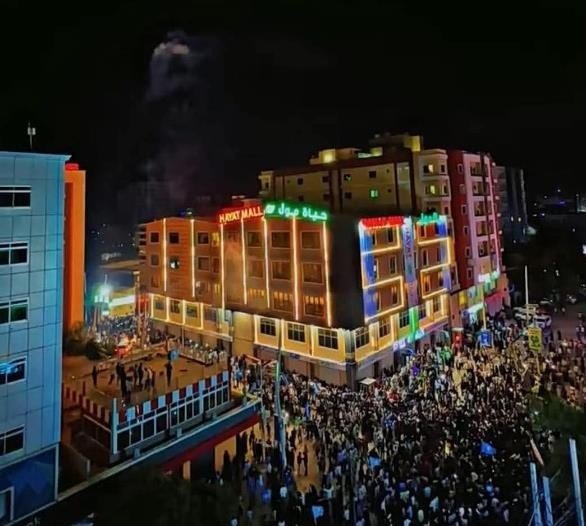
The impact of Hayat Market is not confined to the walls of its stores; it spills out into the streets, sidewalks, and neighborhoods that surround them. Each new branch acts as a catalyst for urban transformation, turning once-neglected areas into thriving community hubs.
Take the KM4 Taleh branch as an example. Before Hayat arrived, the surrounding roads were uneven and riddled with potholes, streetlights were sparse, and public spaces lacked order. Today, the area tells a very different story. Roads have been resurfaced and paved, making transportation easier for both shoppers and delivery vehicles. Lights illuminate the streets, improving safety for families who now shop comfortably into the evening hours. The sidewalks, once cluttered with debris, are now orderly and clean, while local authorities coordinate with Hayat on waste management and sanitation.
This transformation extends beyond infrastructure. With Hayat’s presence, small cafes, juice stalls, and clothing vendors have sprung up around its branches, thriving on the foot traffic that Hayat attracts. A once-quiet corner of Mogadishu now hums with life, the sidewalks alive with families, youth, and business owners seizing new opportunities.
“Hayat’s presence lifted this neighborhood into a thriving community hub. Where there were abandoned lots, there are now businesses. Where streets were dark, they are now well-lit. We are seeing real growth.”
What is remarkable is that these changes are not accidental. Hayat has deliberately invested in the environments around its branches, coordinating with local authorities to ensure that its growth benefits entire communities. By installing security cameras, upgrading pavements, and supporting cleanliness drives, Hayat demonstrates a model of corporate citizenship where business success is tied directly to community wellbeing.
The ripple effects are visible everywhere. Children walk to school along safer sidewalks. Families gather in small cafes that have opened nearby. Vendors who once struggled now sell refreshments and snacks to crowds of Hayat shoppers. These improvements make the presence of Hayat more than just a retail convenience — they make it a driver of urban renewal and a symbol of modern Somali city life.
“Hayat
branches act as anchors of urban renewal — transforming entire districts into
thriving community hubs.”
Delivery and Digital Innovation
If Hayat Market’s physical stores represent the heart of modern Somali retail, its Adeeg delivery system is the brain — the digital engine driving the future of convenience, access, and inclusivity. Introduced as a response to the needs of busy urban families, professionals, and diaspora supporters who shop remotely for loved ones, Adeeg has become one of Hayat’s most celebrated innovations.
With Adeeg, customers can order groceries and household goods online or through a simple mobile call, and deliveries are carried out with speed and reliability. This service is not just about bringing items to doorsteps; it is about reshaping habits in a society where digital commerce is still in its early stages. Adeeg represents a bold leap forward — proving that Somalia is ready to embrace the future of technology-driven retail.
The diaspora community has also embraced Adeeg enthusiastically. Somalis living abroad can place orders for their families back home, confident that Hayat will deliver quality goods promptly. This system has not only strengthened bonds between families across continents but has also increased trust in Somali businesses as reliable, customer-focused, and globally relevant.

From a business perspective, Adeeg reflects Hayat’s forward-thinking philosophy. The system integrates logistics, customer service, and technology in ways that are rare in the region. Branded delivery vans and motorbikes, staff equipped with smartphones, and digital tracking systems make Adeeg look more like a global delivery service than a local experiment.
Economists and business analysts have praised Adeeg as a symbol of Somalia’s readiness for digital transformation. By normalizing online ordering and home delivery, Hayat is paving the way for e-commerce, fintech solutions, and broader digital inclusion across the country. It is not just about shopping; it is about bringing Somalia into the digital age.


Adeeg.com -by Hayat Market
“Adeeg — bringing groceries to doorsteps and pushing Somali retail into the digital era.”
Empowering Women and Youth
One of Hayat Market’s most profound contributions to Somalia is not just in what it sells, but in who it empowers. From its earliest days, Hayat has been deliberate in opening its doors to young people and women, recognizing them as the backbone of Somalia’s future. Today, across its branches, you will find women working as cashiers, supervisors, and even managers, while youth take on roles in logistics, inventory, and customer service.
For many employees, this is their first formal job — an entry into the world of structured employment, complete with training, mentorship, and the opportunity to grow. In a society where informal work dominates, these roles bring not only income but a sense of dignity and long-term career potential.
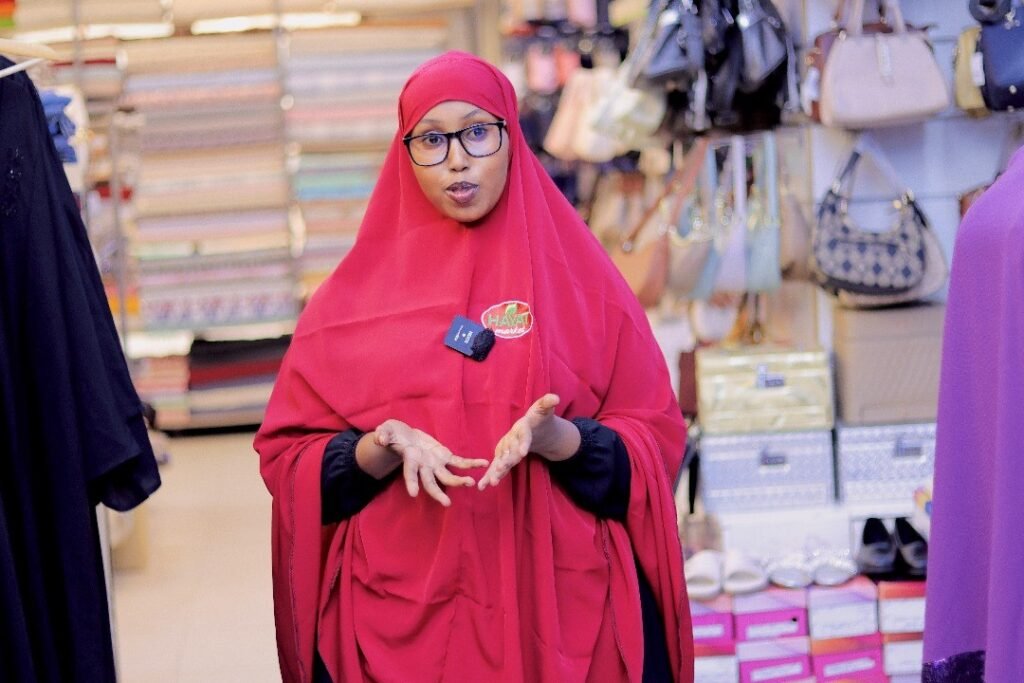
“Working at Hayat, in a well structured environment has had a tremendous empowerment on me and all my colleagues. I was trained on customer service and this has changed how I see myself — I’m not just earning; I’m building skills that will stay with me forever.”
For youth, the opportunities are equally transformative. Young men and women are trained in modern retail technology — from operating point-of-sale systems to managing inventory through digital platforms. Logistics teams learn how to handle deliveries efficiently, while others gain knowledge of food safety, customer care, and store management. These are skills that open doors to a world of opportunities, both within and beyond Hayat.
Community leaders often point out that youth employment is not only about economics — it is about social stability. By creating structured work and career paths for young people, Hayat is directly reducing the risks associated with unemployment, idleness, and instability. Each paycheck earned by a young employee helps support a family, pay for siblings’ education, and strengthen the resilience of entire households.
Equally important is Hayat’s commitment to inclusivity. Women, often overlooked in formal employment, are not just welcomed but actively encouraged to grow within the company. Flexible schedules allow them to balance work and family, while professional development opportunities prepare them for leadership roles. This inclusive approach is quietly reshaping cultural norms and empowering women to take on new responsibilities in society.
In this way, Hayat Market is not just selling goods; it is building people. Every young cashier, every woman supervisor, every logistics worker is a story of empowerment — a step forward for Somali human capital and a foundation for national progress.
“Women at the forefront — Hayat’s inclusive workforce is reshaping the Somali retail landscape.”
Local Goods, Global Standards
One of the most powerful contributions Hayat Market has made to Somalia’s economic life lies in its sourcing philosophy. From the beginning, Hayat committed itself to offering Somali families products that meet international quality standards while also giving space for locally produced goods to shine. This dual approach — supporting homegrown industries while importing certified goods — has created a marketplace that is both global in reach and proudly Somali at heart.
Walk through the aisles of Hayat, and you will see Somali-made sesame oil, fresh dairy products, spices, and household cleaning agents displayed proudly alongside imported goods from Dubai, Nairobi, and Istanbul. For the consumer, this means choice. Families can purchase products with confidence, knowing that each item — whether local or international — has been vetted for quality, hygiene, and safety.
For local producers, however, the impact is far deeper. In a retail market once dominated by informal shops, many Somali entrepreneurs struggled to scale their businesses. Without reliable shelf space, their goods remained confined to small markets. Hayat changed that dynamic by creating a platform where local businesses could stand shoulder to shoulder with global brands
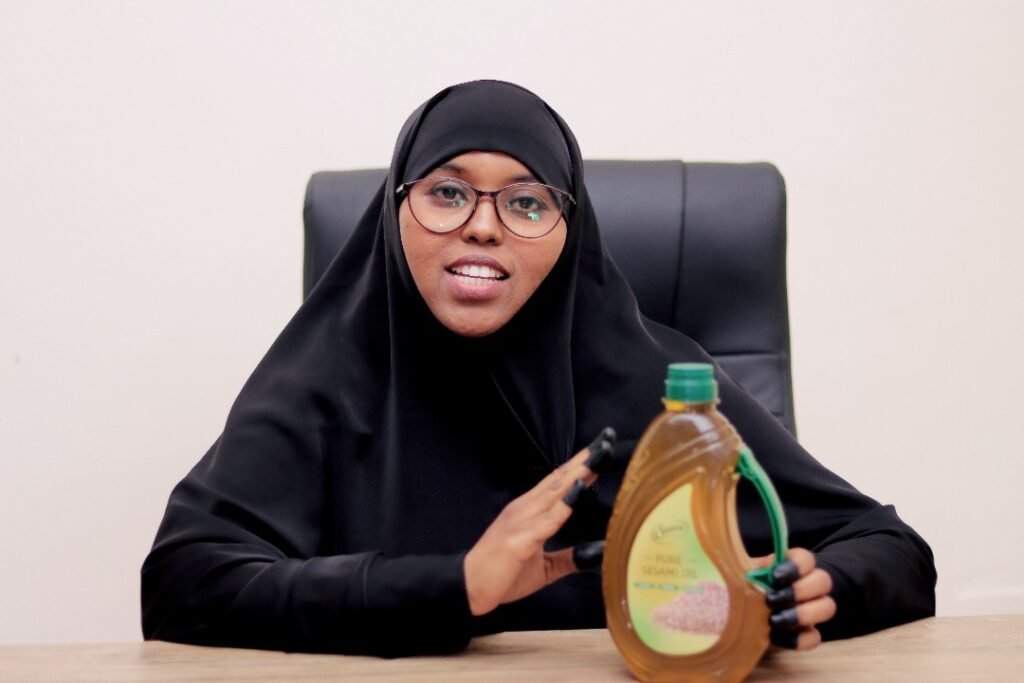
Suad Dahir, a local supplier, described the difference Hayat made for her: “Before Hayat, I only sold in a few shops, and I struggled to expand. When Hayat agreed to place my products on their shelves, everything changed. Now I produce more, hire more people, and my products are known across Mogadishu. It gave me a chance to grow.”
The inclusion of local producers also strengthens Somalia’s broader economy. By sourcing from Somali farmers, processors, and manufacturers, Hayat reduces reliance on imports and injects money directly into domestic industries. This creates a cycle where local businesses grow, hire more staff, and contribute taxes and community development — all while providing consumers with affordable alternatives to imported goods.
Yet Hayat has not compromised on quality. Every product — whether imported or local — must meet rigorous standards of packaging, shelf life, and hygiene. This has had a transformative effect on Somali producers, who are now raising their standards to match international benchmarks. In doing so, Hayat is not only supporting local industry but also pushing it toward modernization and global competitiveness.
For Somali families, the result is a marketplace where affordability and quality meet. For Somali producers, it is a gateway to scale, recognition, and sustainability. In addition, for the country at large, it is a model of how retail can drive both economic self-reliance and global integration.
“From Somalia, for Somalia — Hayat champions local producers while ensuring international
Hayat Market’s growth as Somalia’s leading retail chain has been shaped not only by local production, but also by carefully built global partnerships—most notably with producers from various parts of the world. Through this collaboration, Hayat has been able to offer Somali households a reliable mix of international-standard food, clothing, and household goods, strengthening consumer trust and expanding choice across its branches.
Global Certified suppliers contribute a broad range of products, including juices, biscuits, chocolates, pasta, canned foods, cooking oils, spices, garments, shoes, and household items. These goods have become everyday staples for many Somali families, valued for their consistency, safety standards, and affordability. According to Hayat’s Product Sourcing Manager, the partnership is rooted in quality and reliability:
“Global producers understand scale, standards, and consistency. Working with them allows us to maintain steady supply while ensuring that every product on our shelves meets our quality expectations for Somali consumers.”
Beyond products, the partnership reflects a growing economic and cultural bridge between Somalia and the Global Community. Hayat integrates International imports alongside Somali-made goods, creating a balanced retail ecosystem where global supply chains support local consumption. The company’s Quality Assurance Manager notes that this approach strengthens trust with customers:
“Our customers see these products as dependable and familiar. When families shop at Hayat, they know they are buying items that meet international standards while still supporting a Somali-owned business.”
From factory floors worldwide to households across Mogadishu, this practice has become part of Hayat’s broader story—one of connection, confidence, and shared growth. In bringing global products closer to Somali consumers, Hayat Market continues to position itself as a bridge between local needs and global opportunity, reinforcing its role as a modern retail institution rooted in people and partnership.
Looking Forward — A Model for the Region
As Hayat Market continues to reshape Somalia’s retail landscape, its ambitions extend far beyond national borders. With a vision to become a leading retail hub in East Africa, the company is setting its sights on regional expansion, aiming to connect markets from Somalia to Kenya, Ethiopia, and beyond. By leveraging a combination of strategic partnerships, robust logistics, and technology-driven operations, Hayat Market is positioning itself not just as a supermarket, but also as a continental model of modern retail.
Digital Innovation at the Core
Central to this vision is Hayat Market’s embrace of digital transformation. Its proprietary delivery platform, Adeeg, allows customers to order groceries online with same-day delivery, offering convenience previously unseen in the region. Advanced inventory management, AI-driven demand forecasting, and mobile payment integrations further enhance efficiency, making Hayat Market a pioneer in modern retail technology. By harnessing data analytics, the company can anticipate customer needs, optimize stock levels, and streamline operations — all while maintaining competitive pricing.
Setting a Regional Standard
Hayat Market’s success demonstrates how retail can catalyze economic and social transformation. Beyond providing goods, the company generates employment, supports local producers, and fosters community development. Its model — combining innovation, customer focus, and regional ambition — provides a blueprint for other African retailers looking to modernize while remaining socially responsible.
Our Vision According to Abdinor Gutale, “Our goal is to show that modern retail can thrive in Africa without losing sight of local needs. Hayat Market is not just a business; it’s a model for how African markets can grow, innovate, and contribute to communities. We want to inspire retailers across the continent to embrace technology, efficiency, and social responsibility together.”
Regional Reach As East Africa continues to urbanize and digital adoption accelerates, Hayat Market is poised to become a regional leader in retail innovation. Its journey demonstrates that visionary management, combined with technology and a commitment to social impact, can create a resilient business that benefits not just shareholders, but communities and economies at large.















Leave a comment