











LEXICO BIZ | EVENT NEWS
SOMIPEX BRINGS SOMALIA’S MANUFACTURING AMBITION INTO VIEW
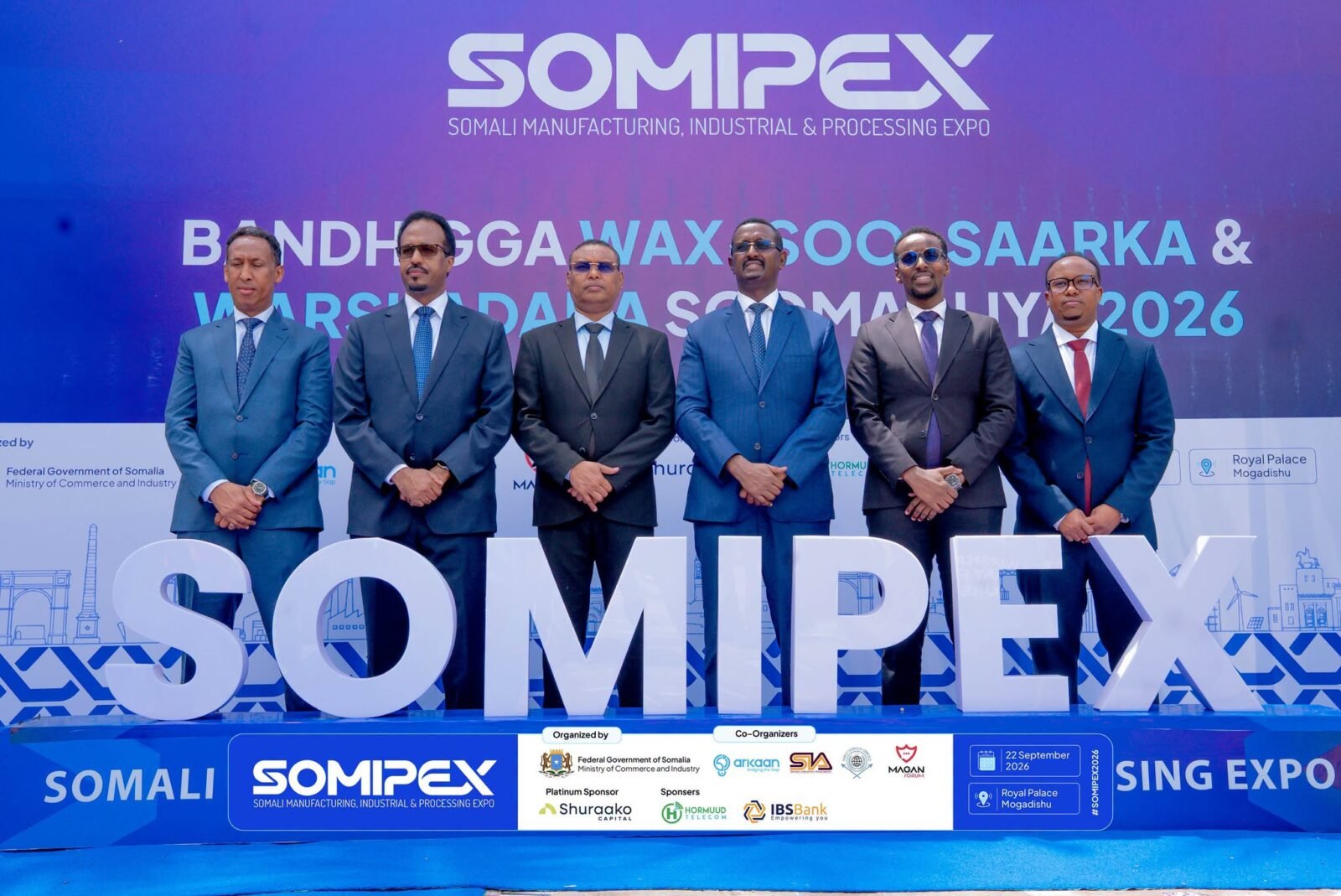
Manufacturers, government officials, financiers and business leaders gathered in Mogadishu for an exhibition built around local production, industrial investment and the growing value of Made in Somalia.
MOGADISHU, 23 September 2026 — The Somali Manufacturing, Industrial and Processing Expo, known as SOMIPEX 2026, has placed locally made products at the centre of a national business conversation about production, employment and investment.
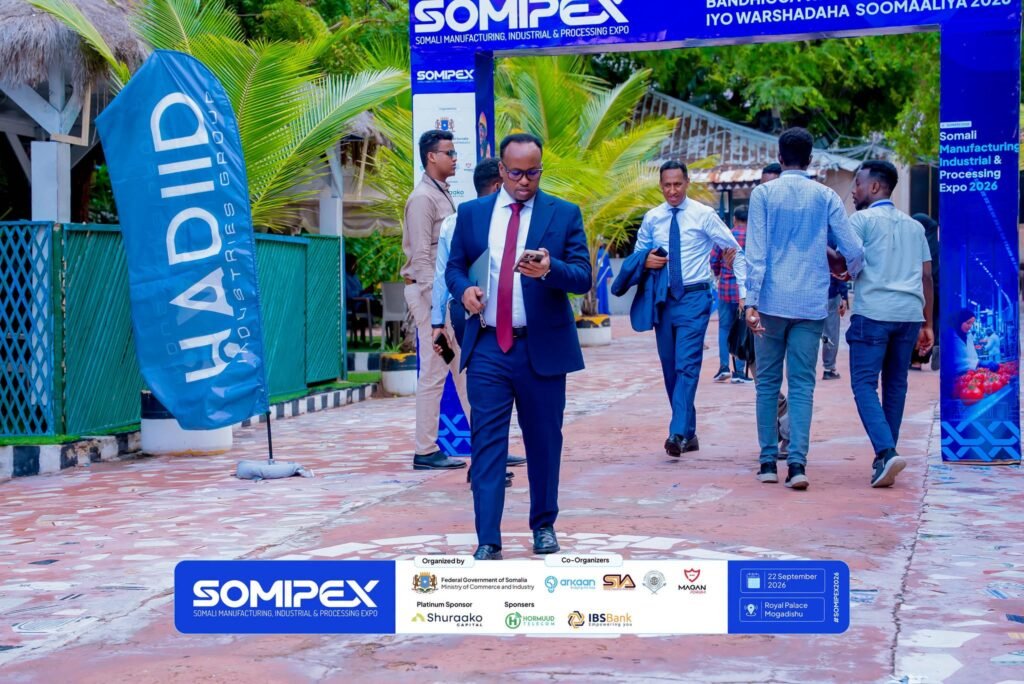
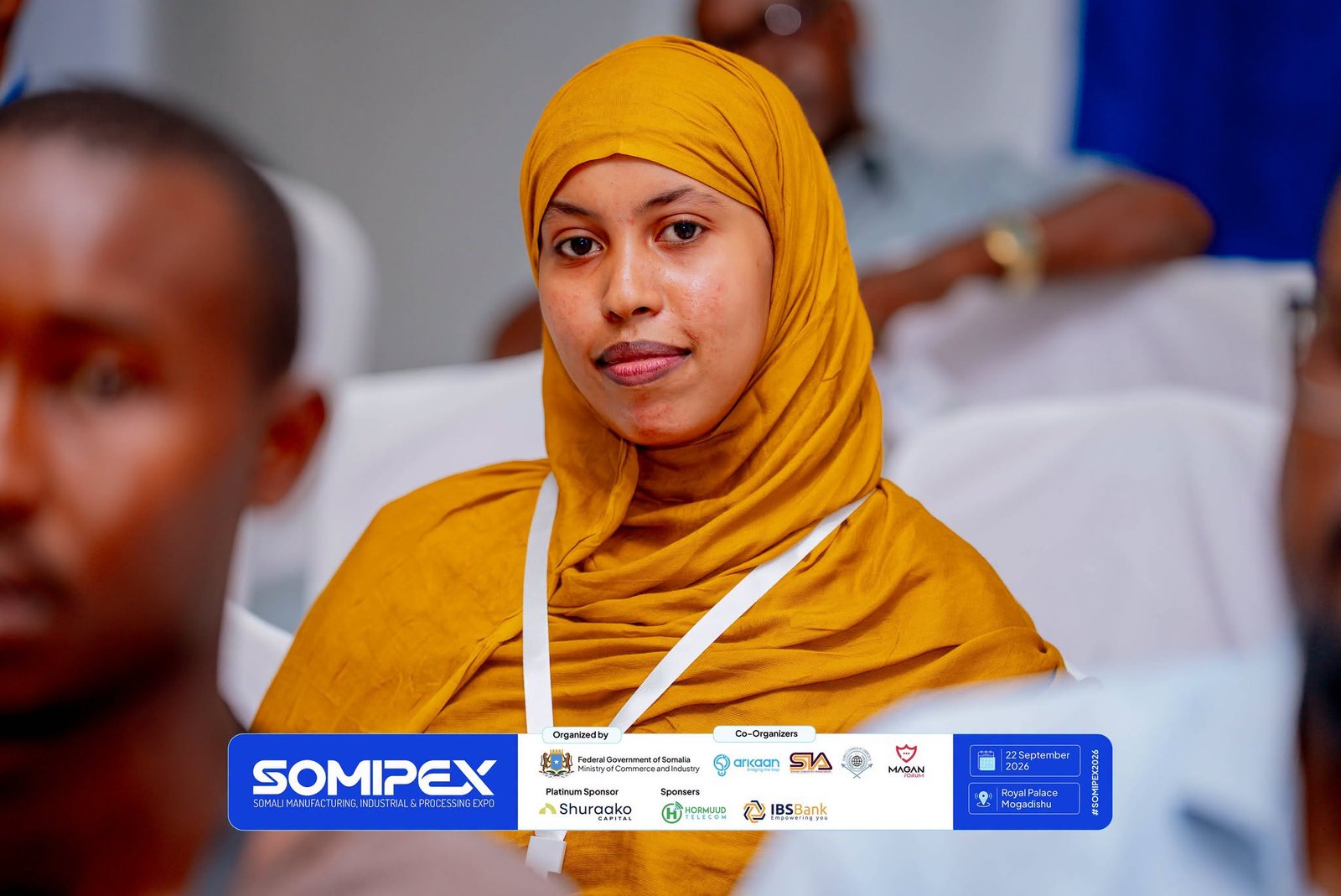
The event opened on 22 September at Royal Palace Hotel in Mogadishu, bringing together manufacturers from the Banadir region alongside government officials, financial institutions, investors and representatives of the wider business community. More than 300 people attended, according to information provided by the organisers.
SOMIPEX gave participating companies an opportunity to exhibit products manufactured or processed in Somalia while meeting institutions that influence industrial growth. The programme combined a product exhibition with two panel discussions, allowing visitors to see what local factories are producing and hear business leaders discuss the environment in which those factories operate.
The result was a practical picture of Somalia’s emerging industrial economy. The exhibition showed that Made in Somalia is no longer only an ambition discussed in conference rooms. Somali companies are already producing, processing, packaging and supplying goods for the domestic market.
“SOMIPEX turned Made in Somalia from a national ambition into a visible business experience.”
Government and industry in the same room
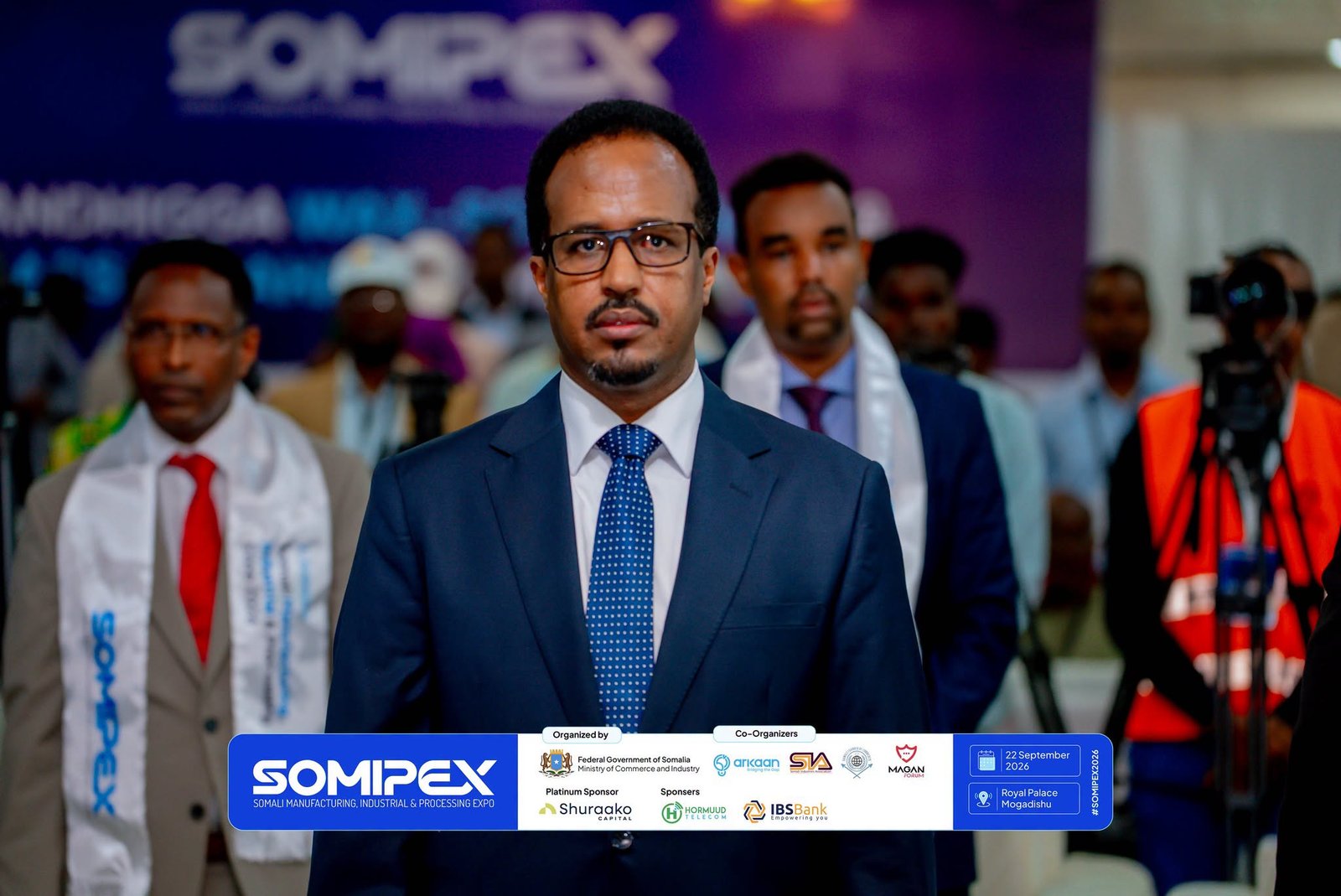

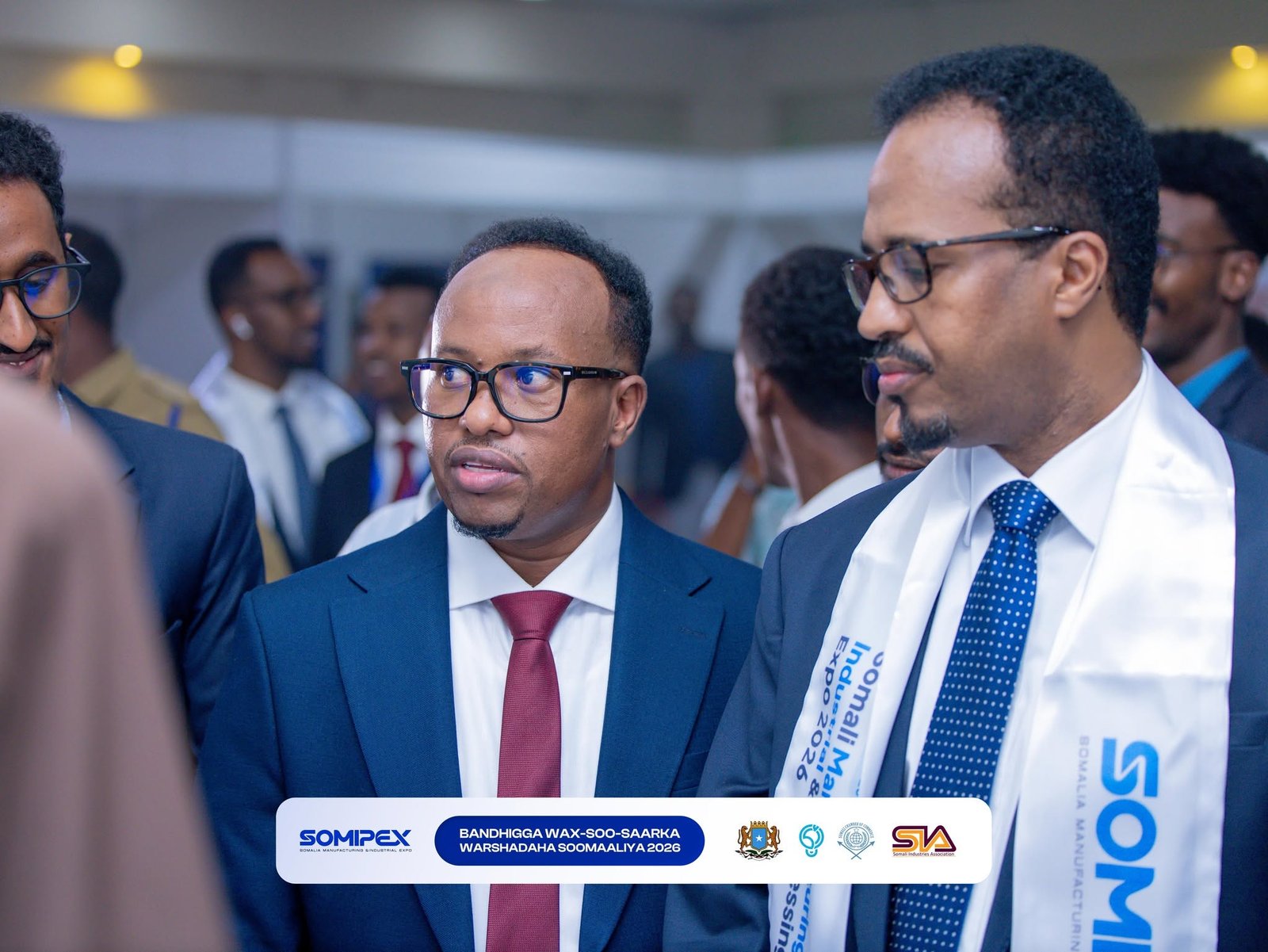
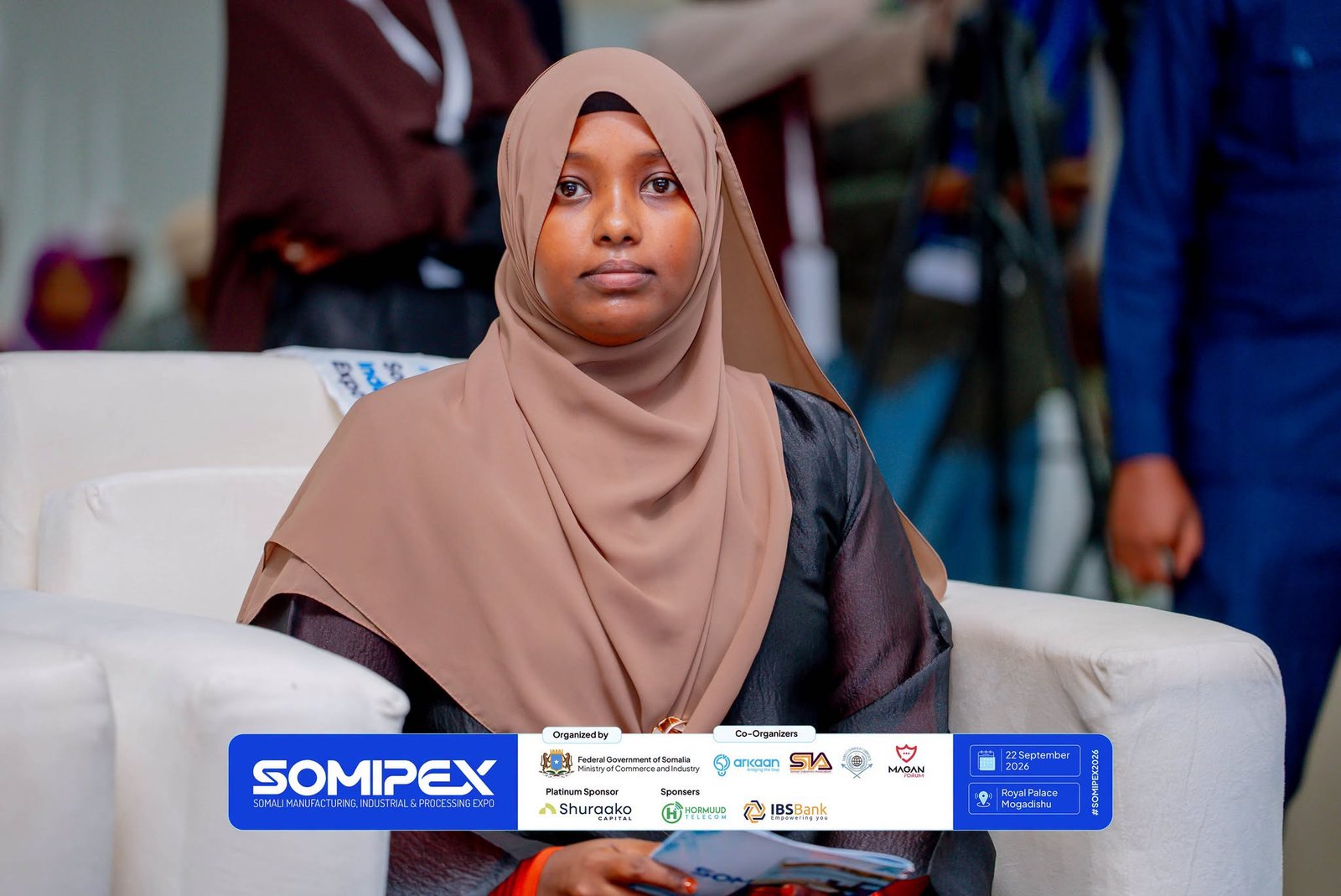

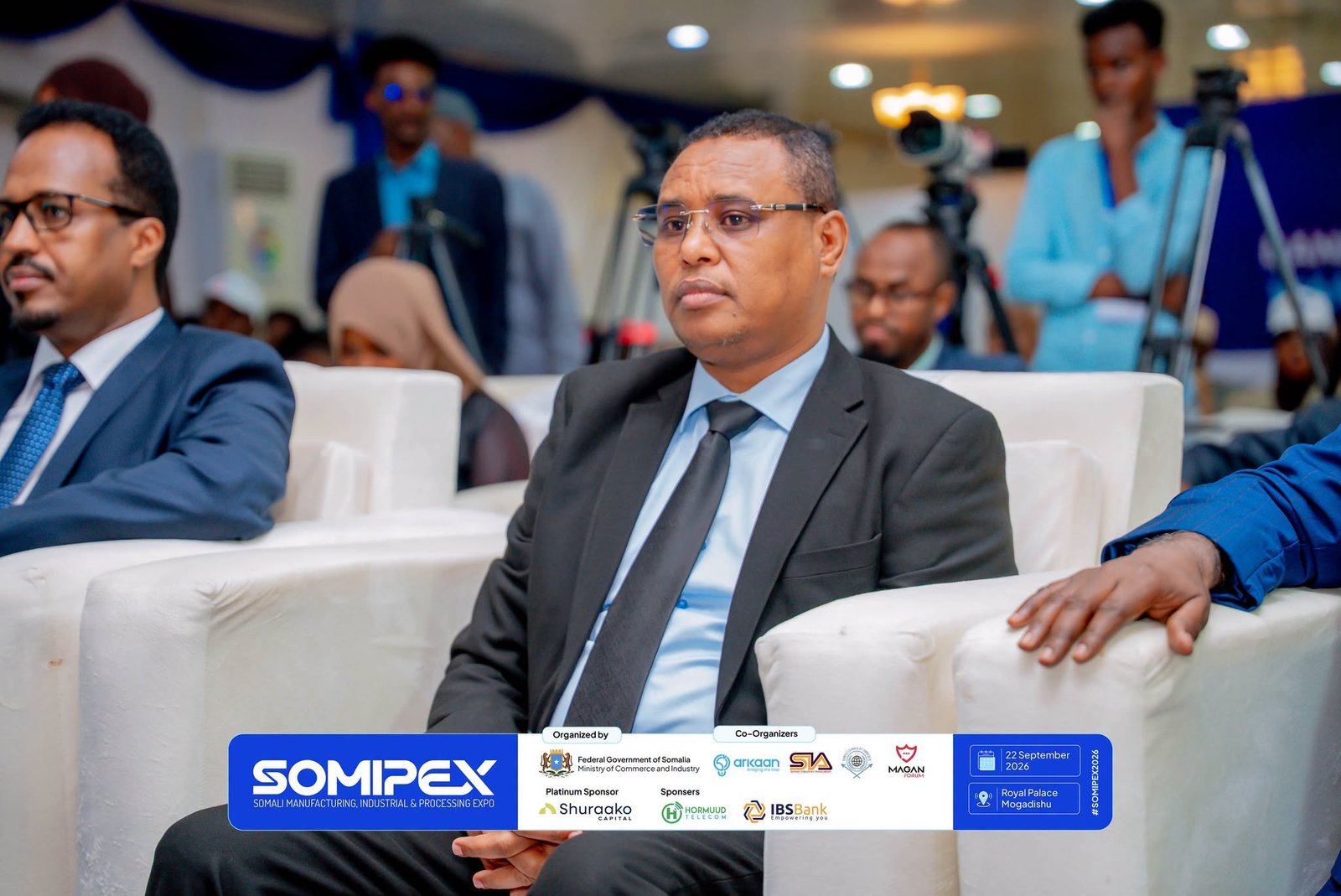
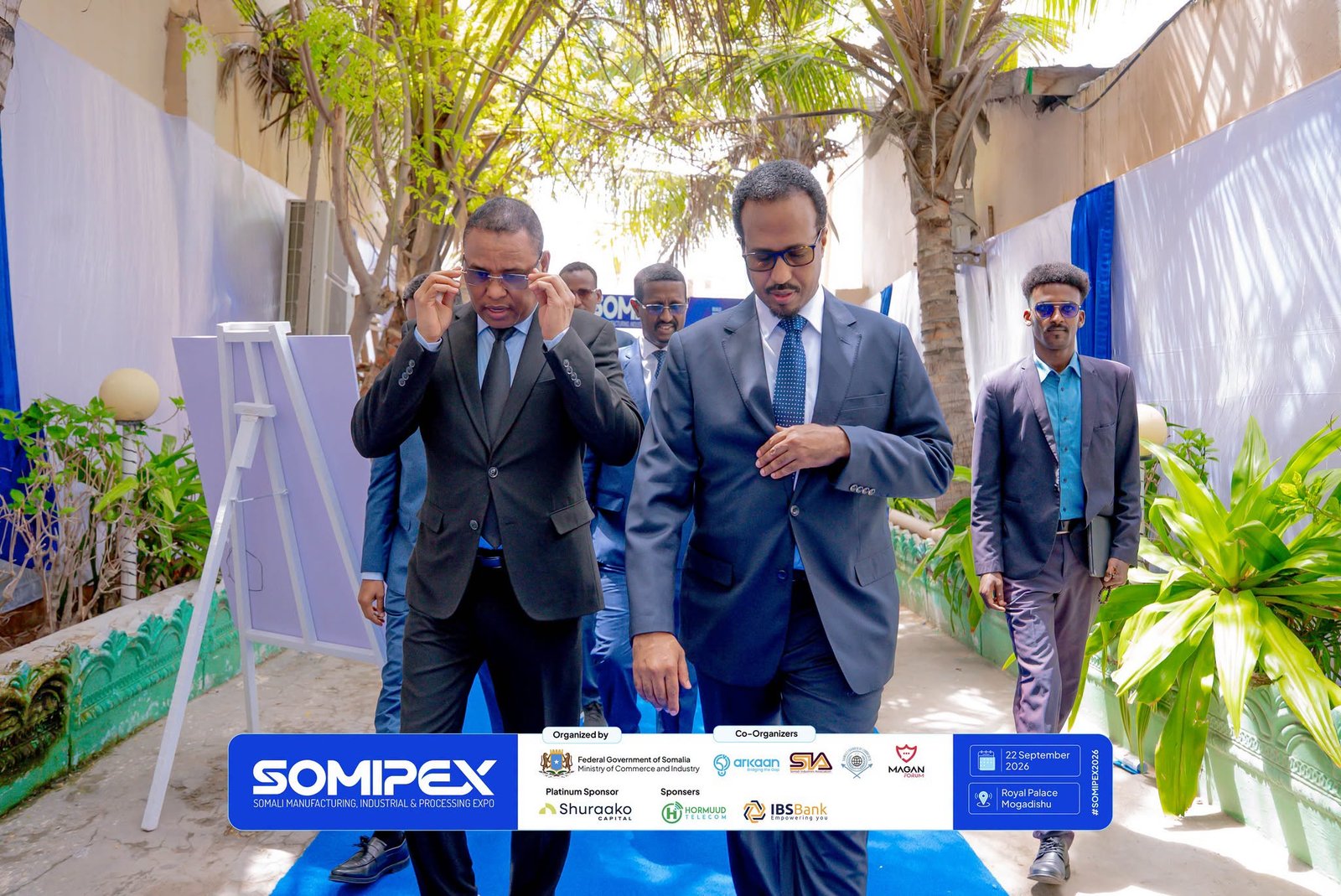
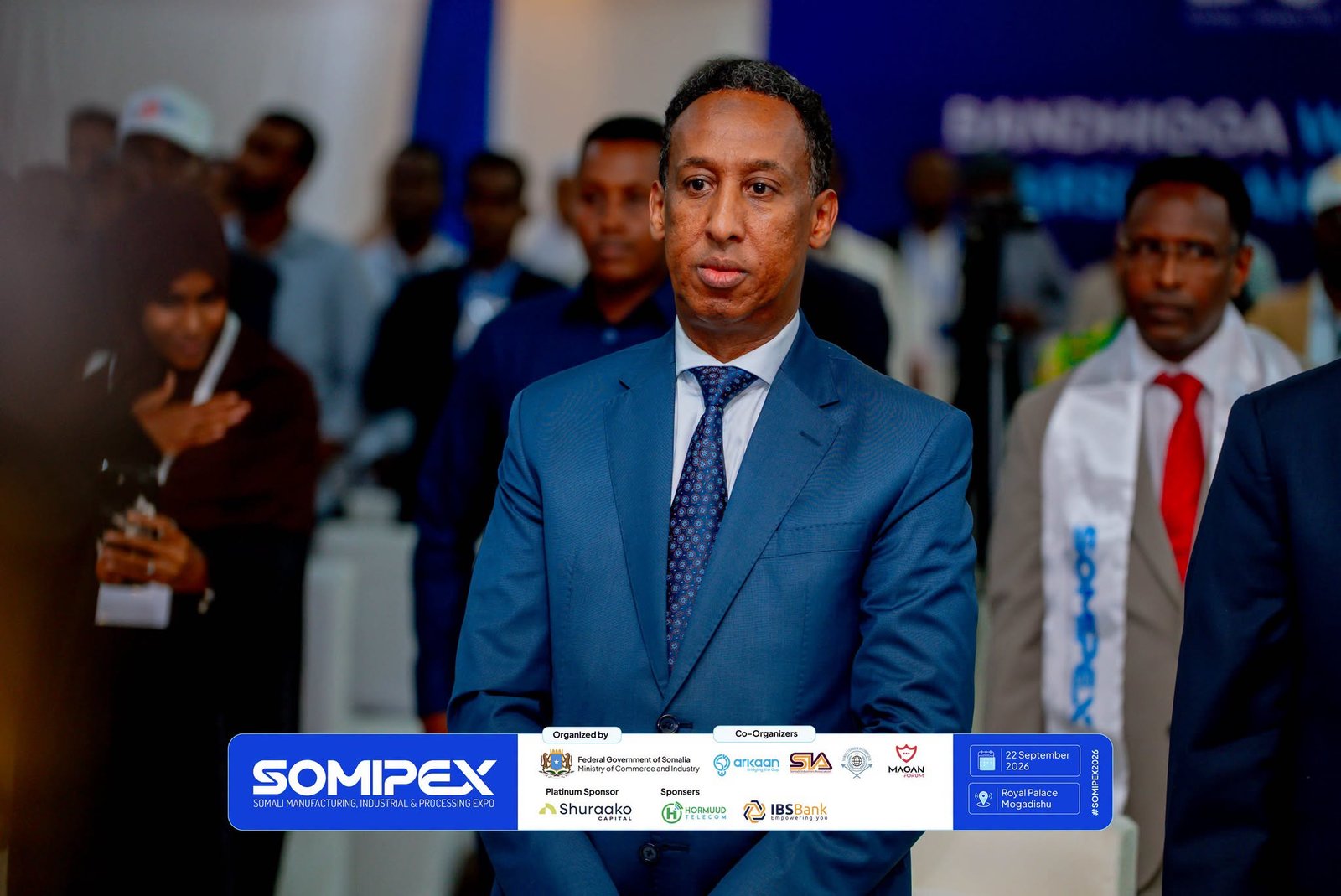
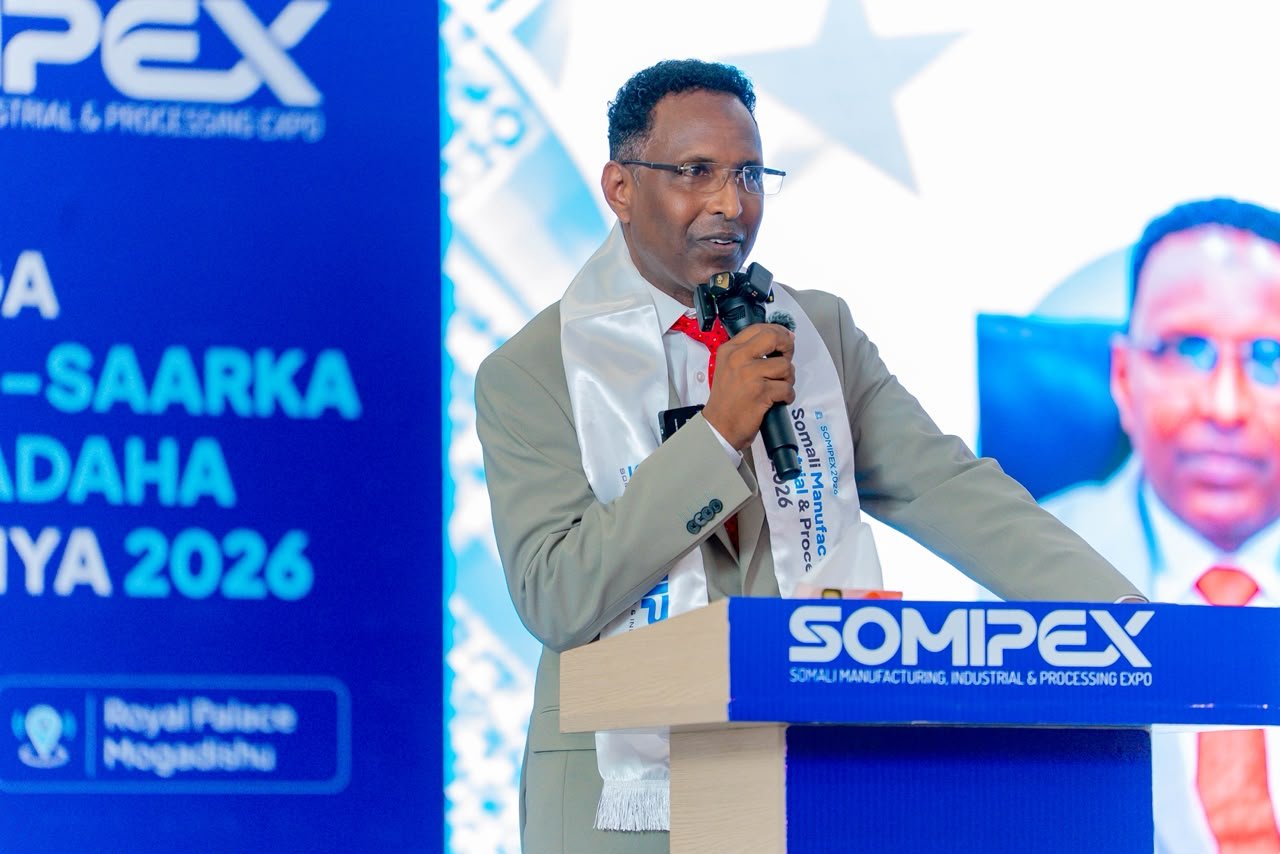

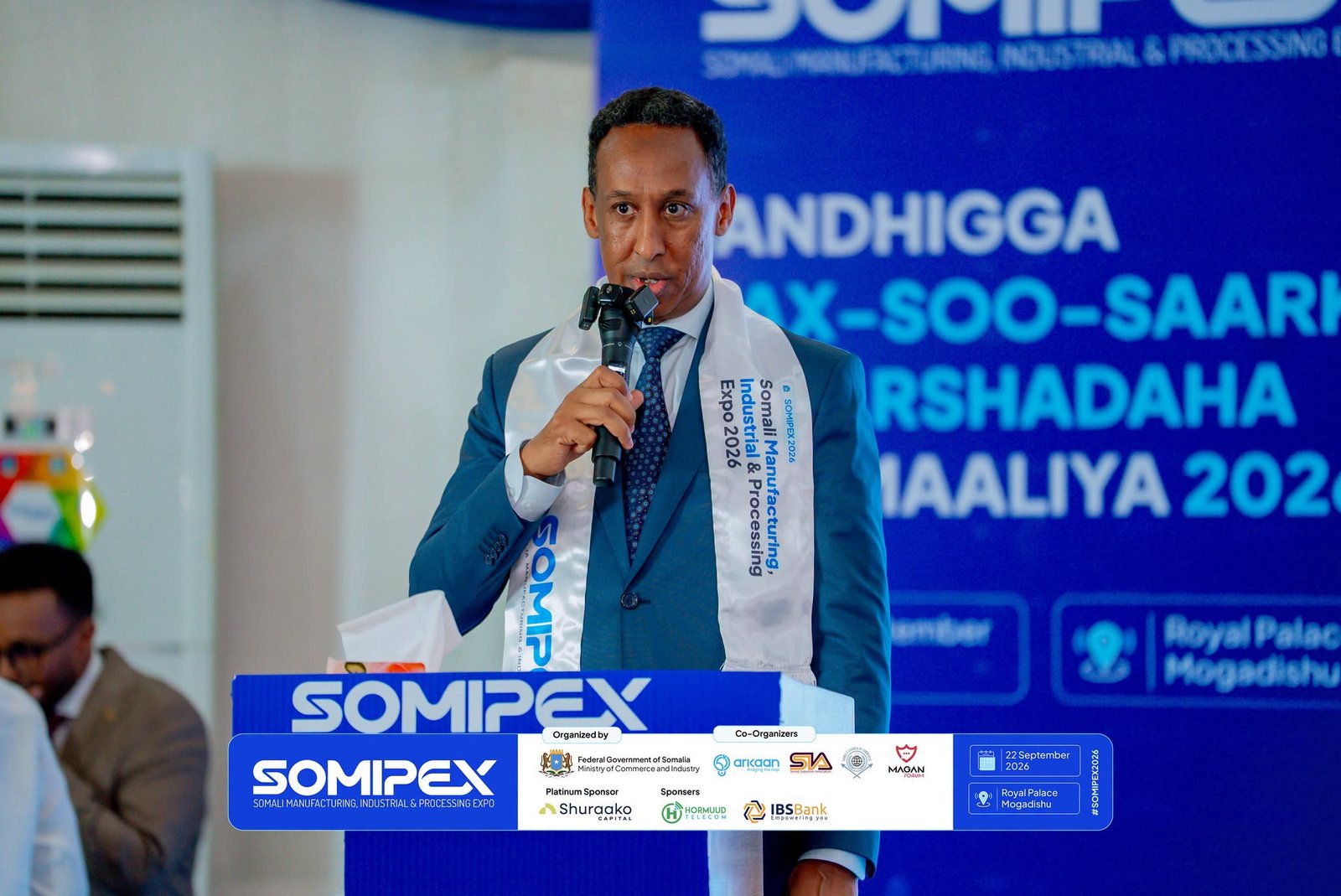





Senior public officials attended the event, including the Deputy Prime Minister, the Minister and Deputy Minister of Commerce and Industry and directors responsible for business registration and industrial development. The chairperson of the Somali Chamber of Commerce also participated, alongside the leadership of the Somali Industrial Association.
Their attendance gave manufacturers a direct opportunity to present their progress and explain the conditions required for further growth.
A factory cannot expand through machinery alone. It needs dependable access to raw materials, trained employees, working capital, energy, packaging, quality systems and distribution. Manufacturers must also complete registration processes, meet regulatory requirements and earn the confidence of retailers and consumers.
By bringing business owners and public officials together, SOMIPEX created space for these connected issues to be discussed as parts of one industrial system.
Before the exhibition, Ministry of Commerce and Industry Director General Ibrahim Ahmed Osman described SOMIPEX as a platform for presenting Somalia’s production capacity, connecting domestic factories with markets and helping investors identify opportunities in the industrial sector. The ministry scheduled the exhibition for 22–23 September in Mogadishu
A marketplace for Somali production
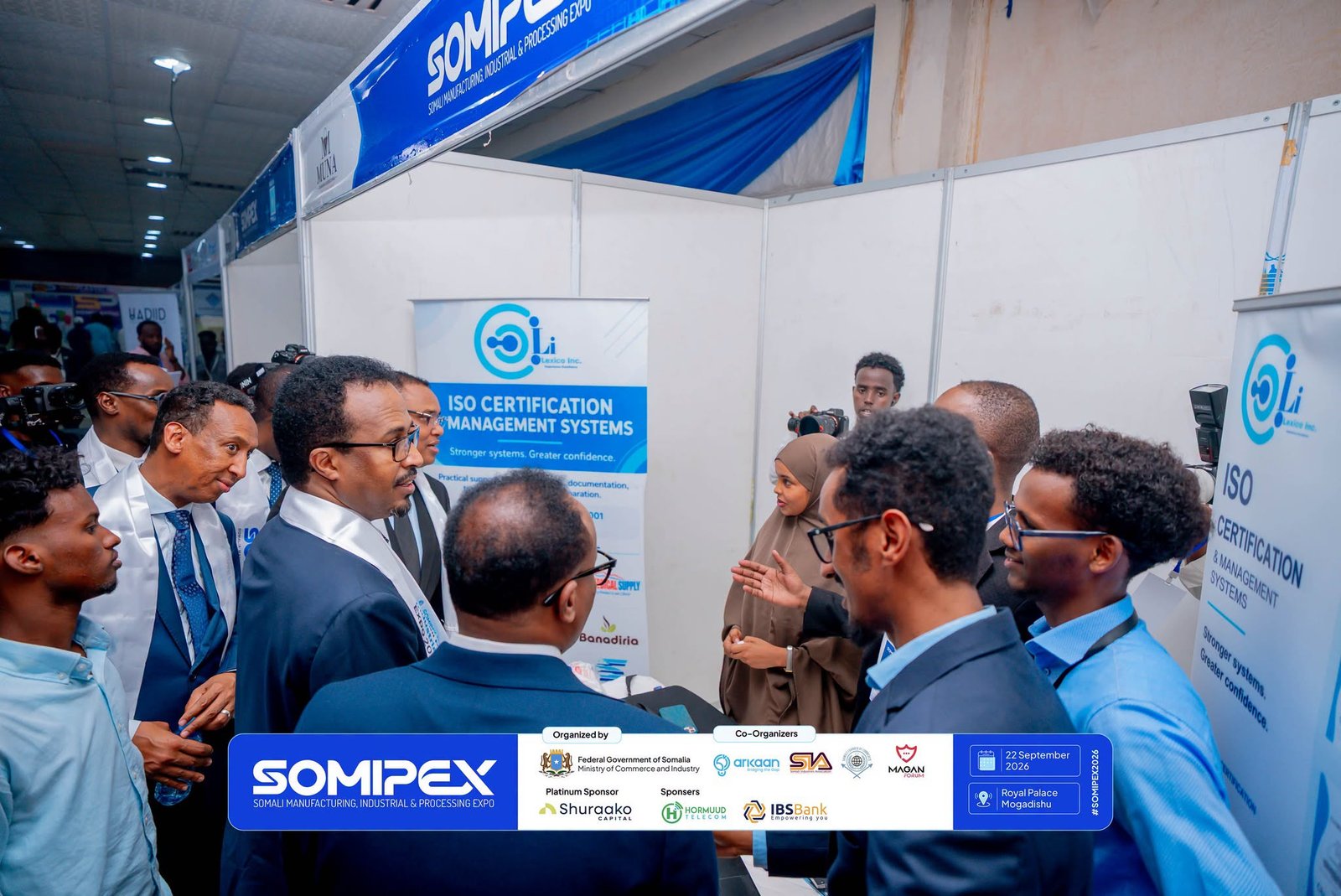


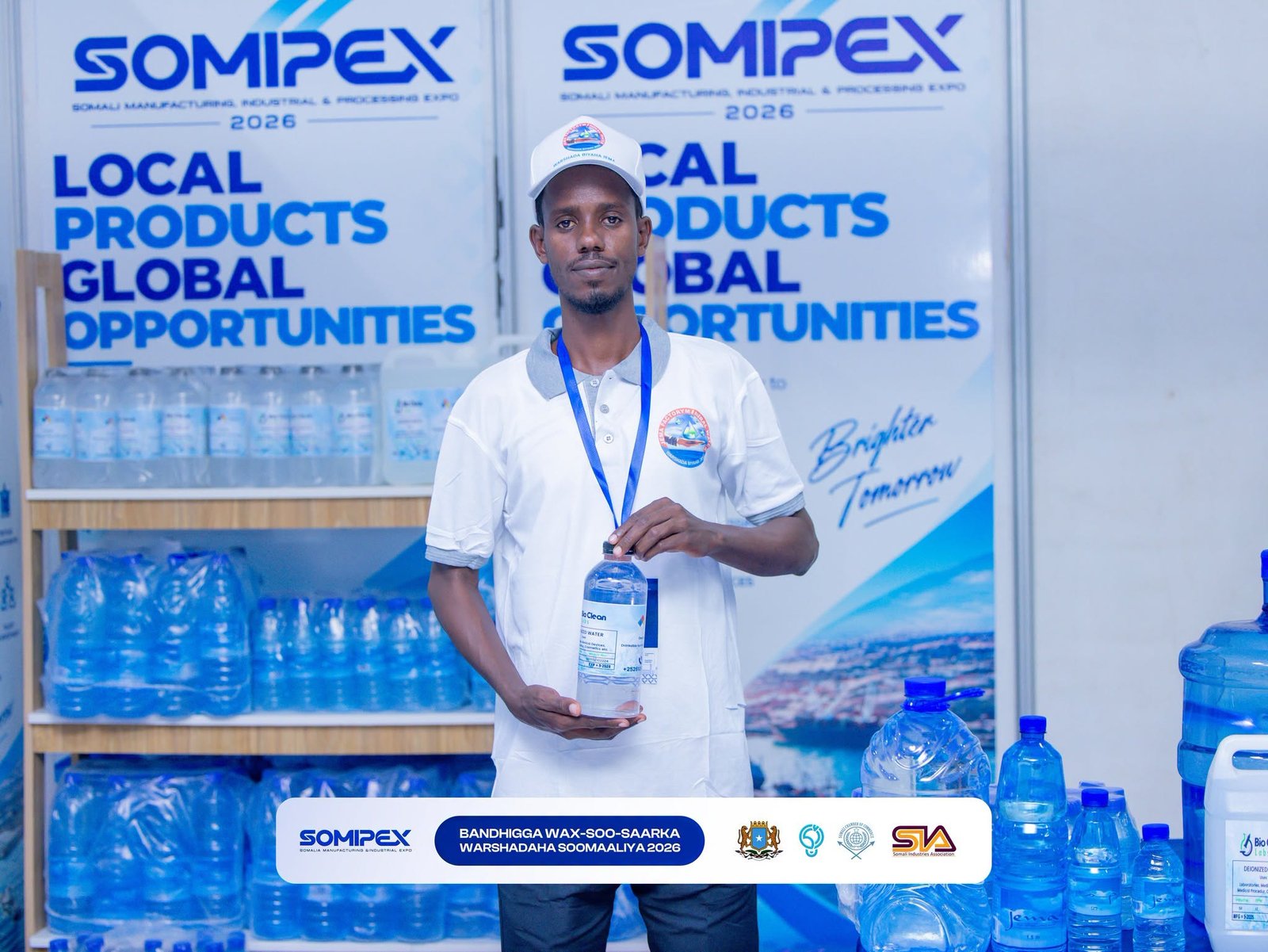
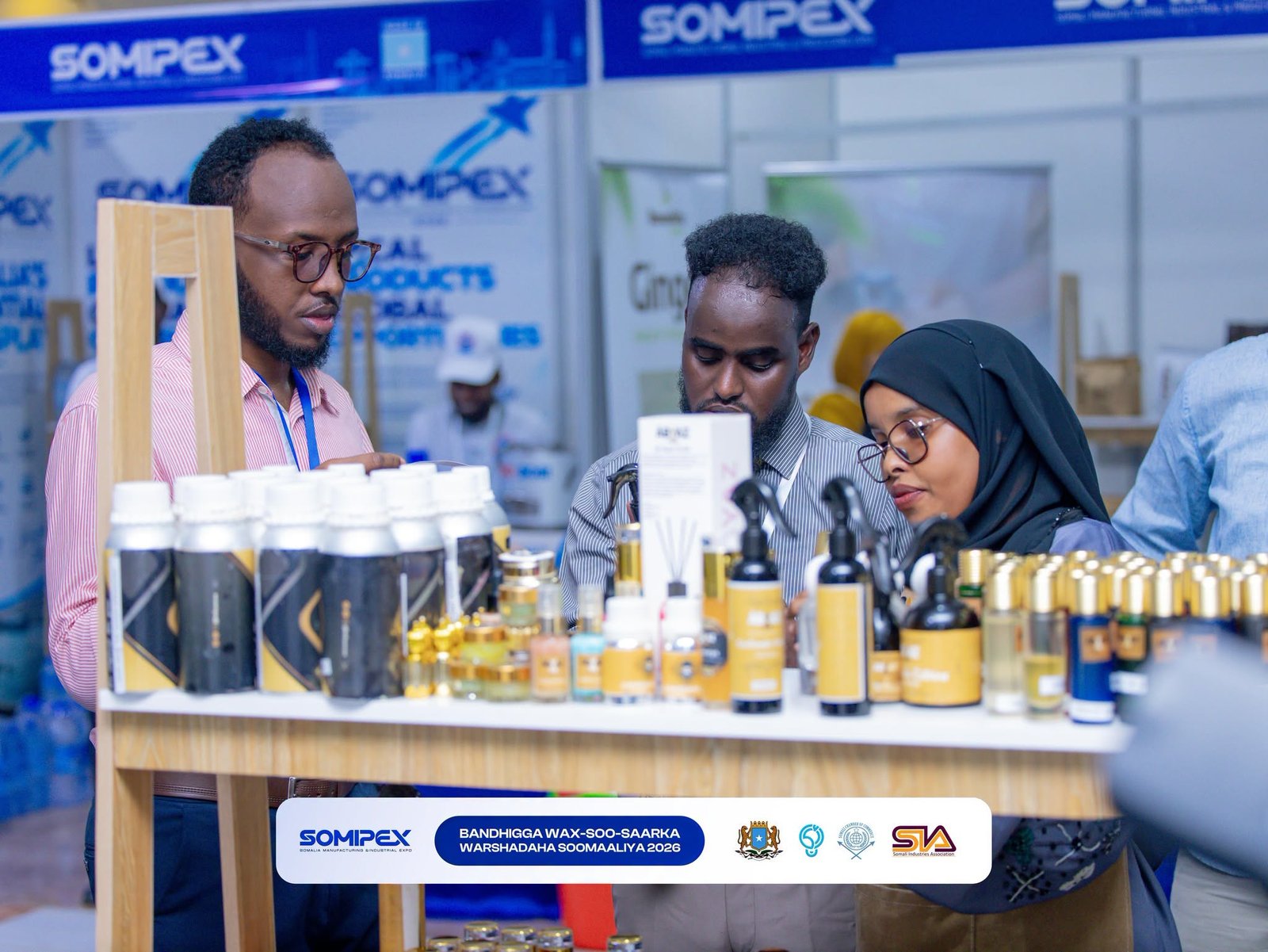
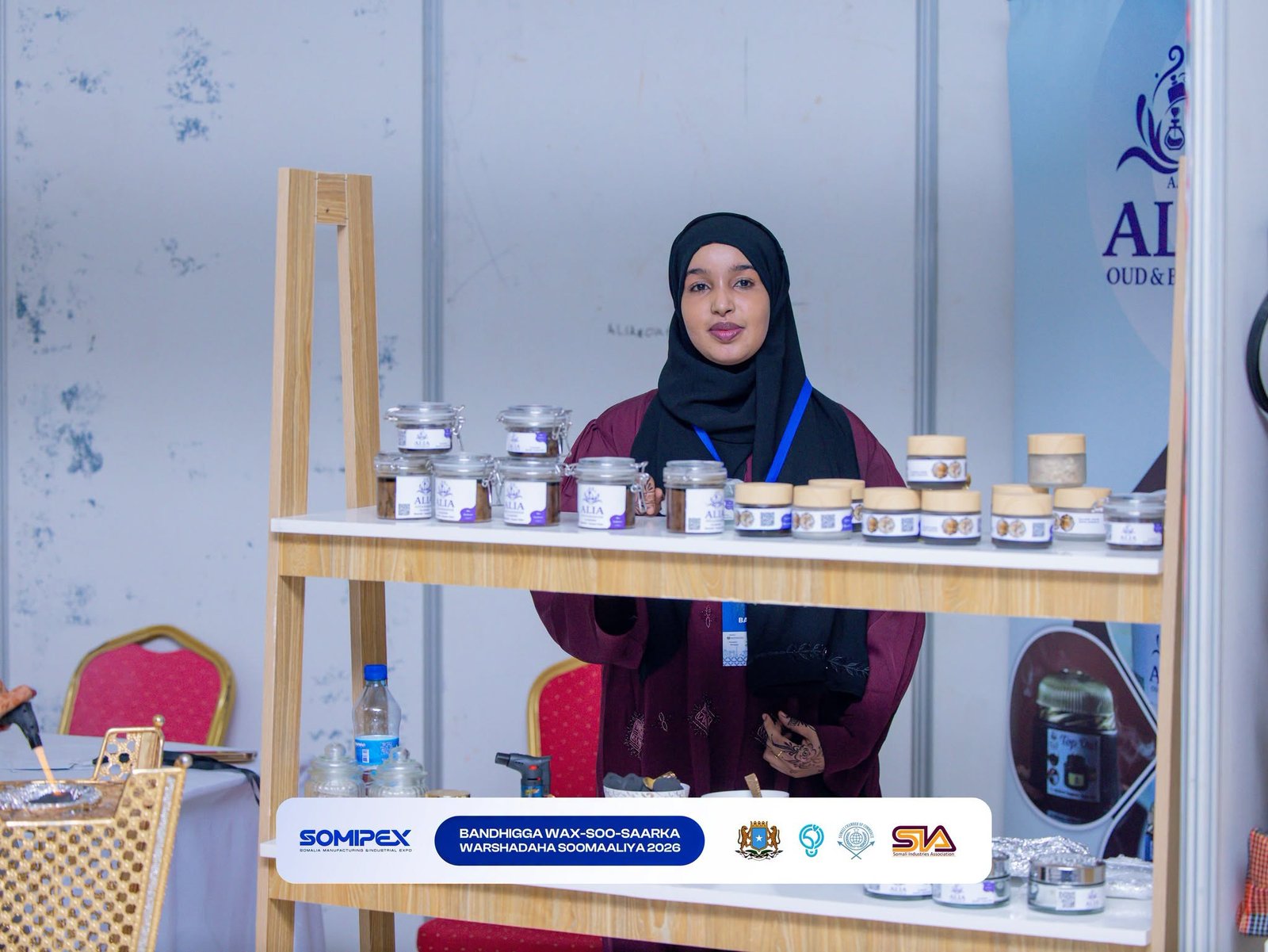
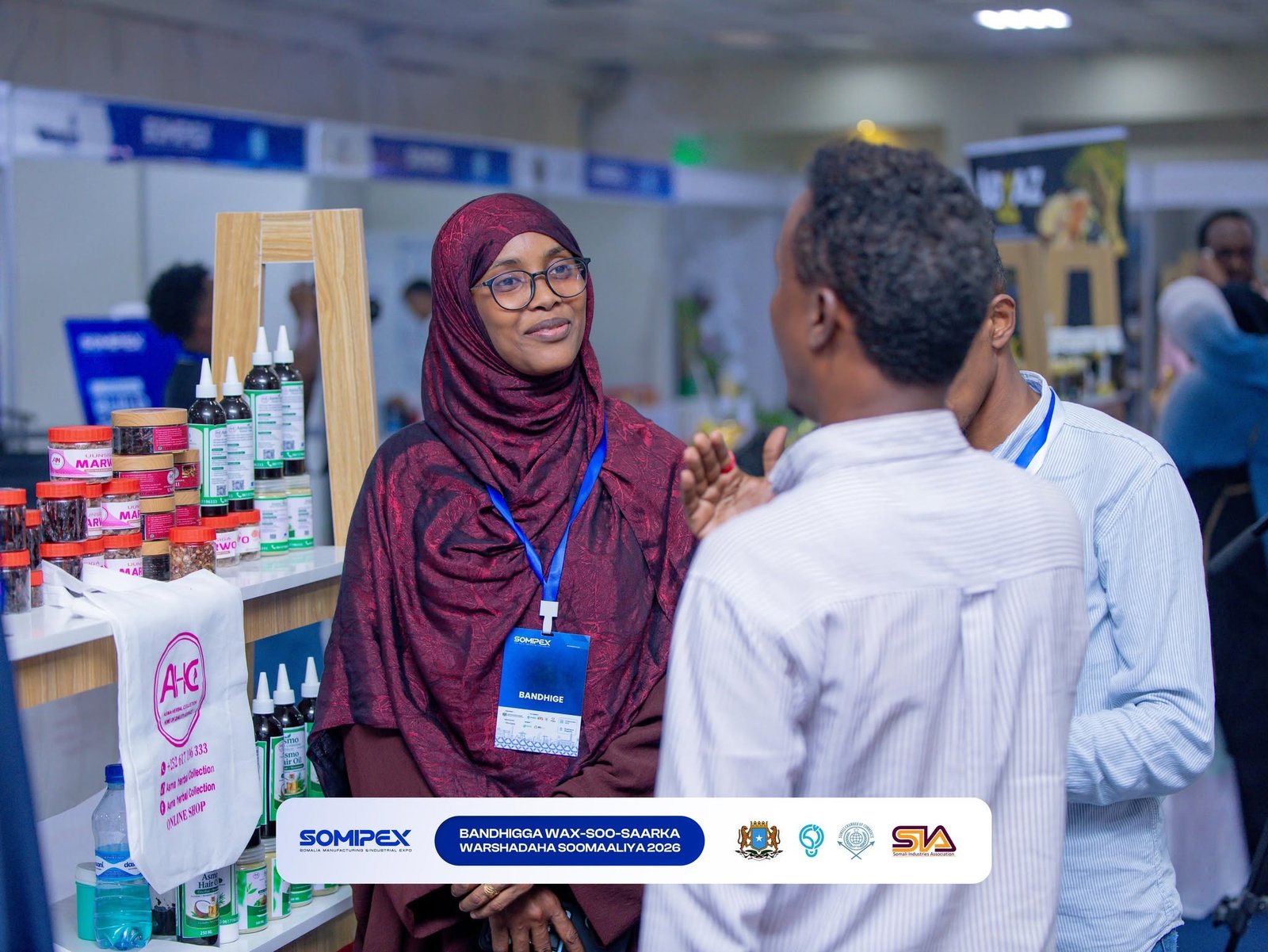
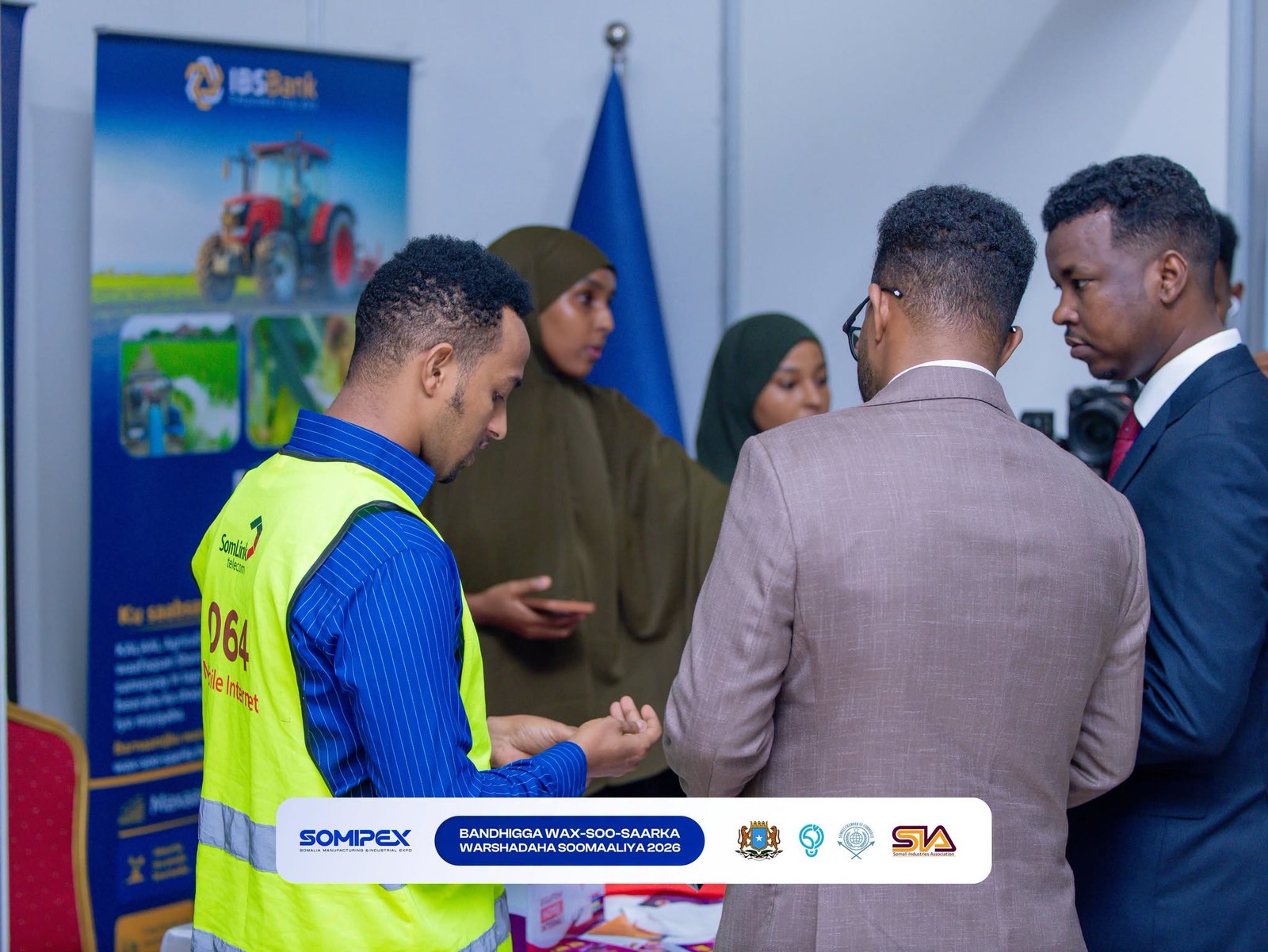
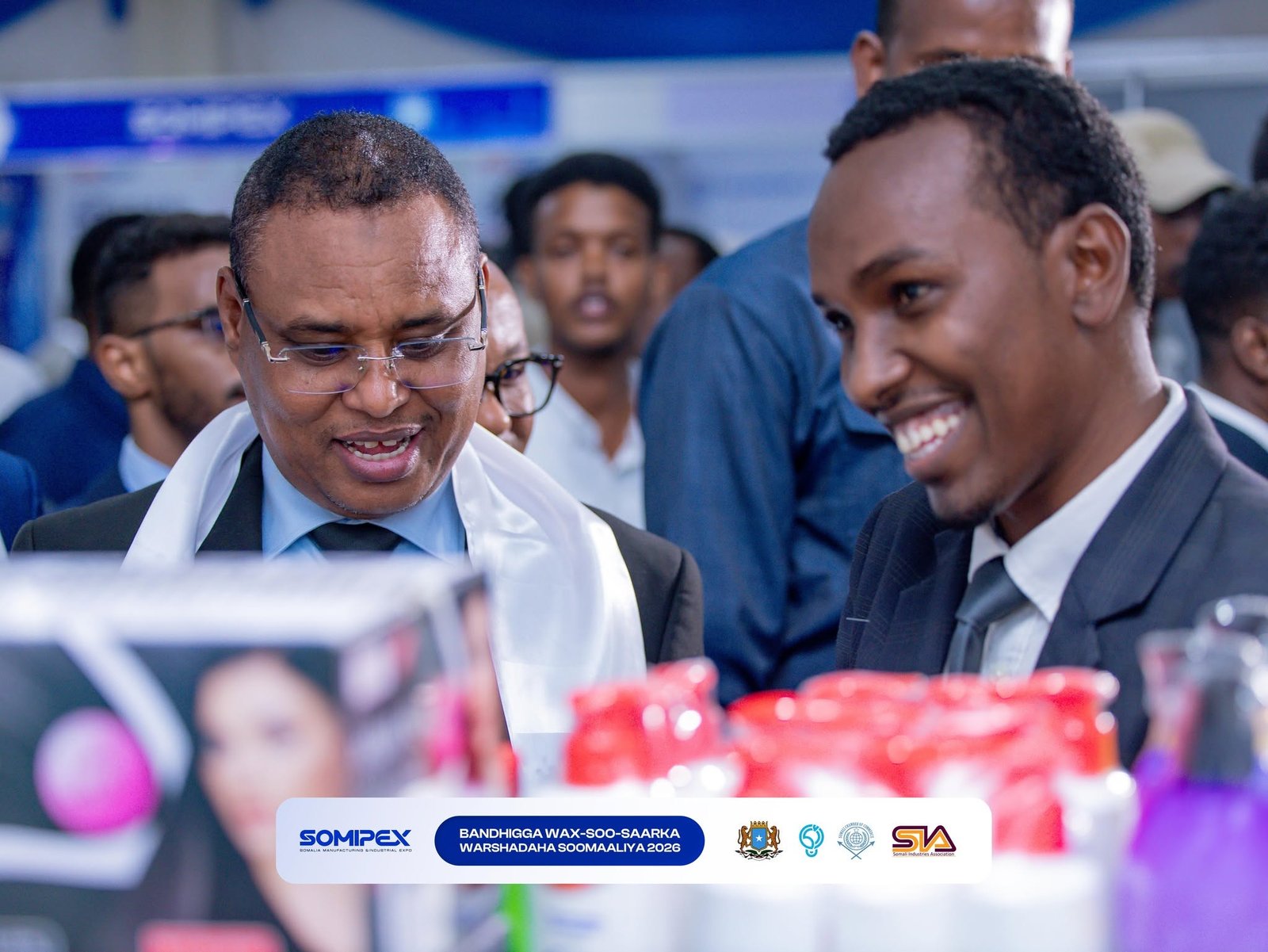

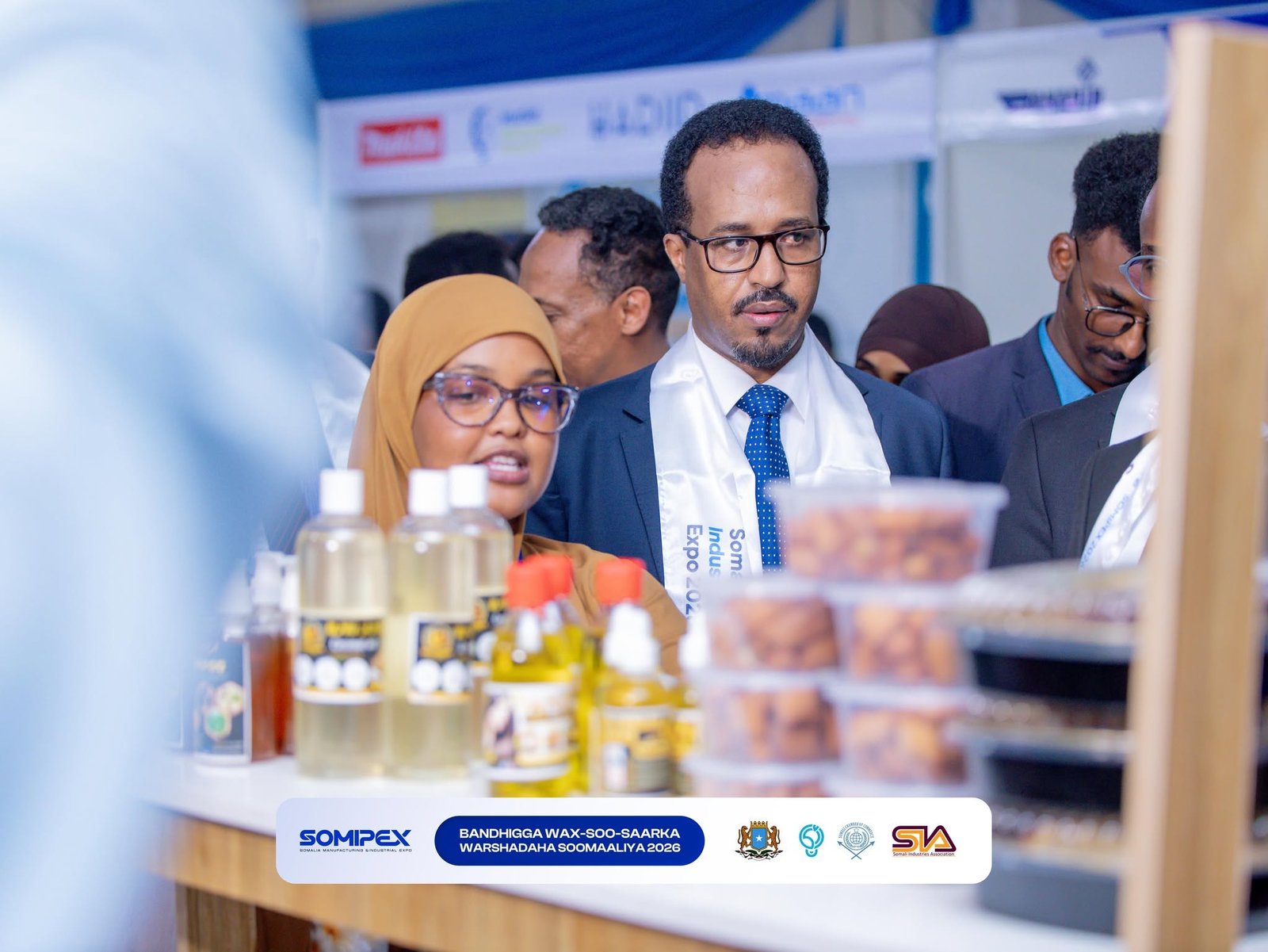


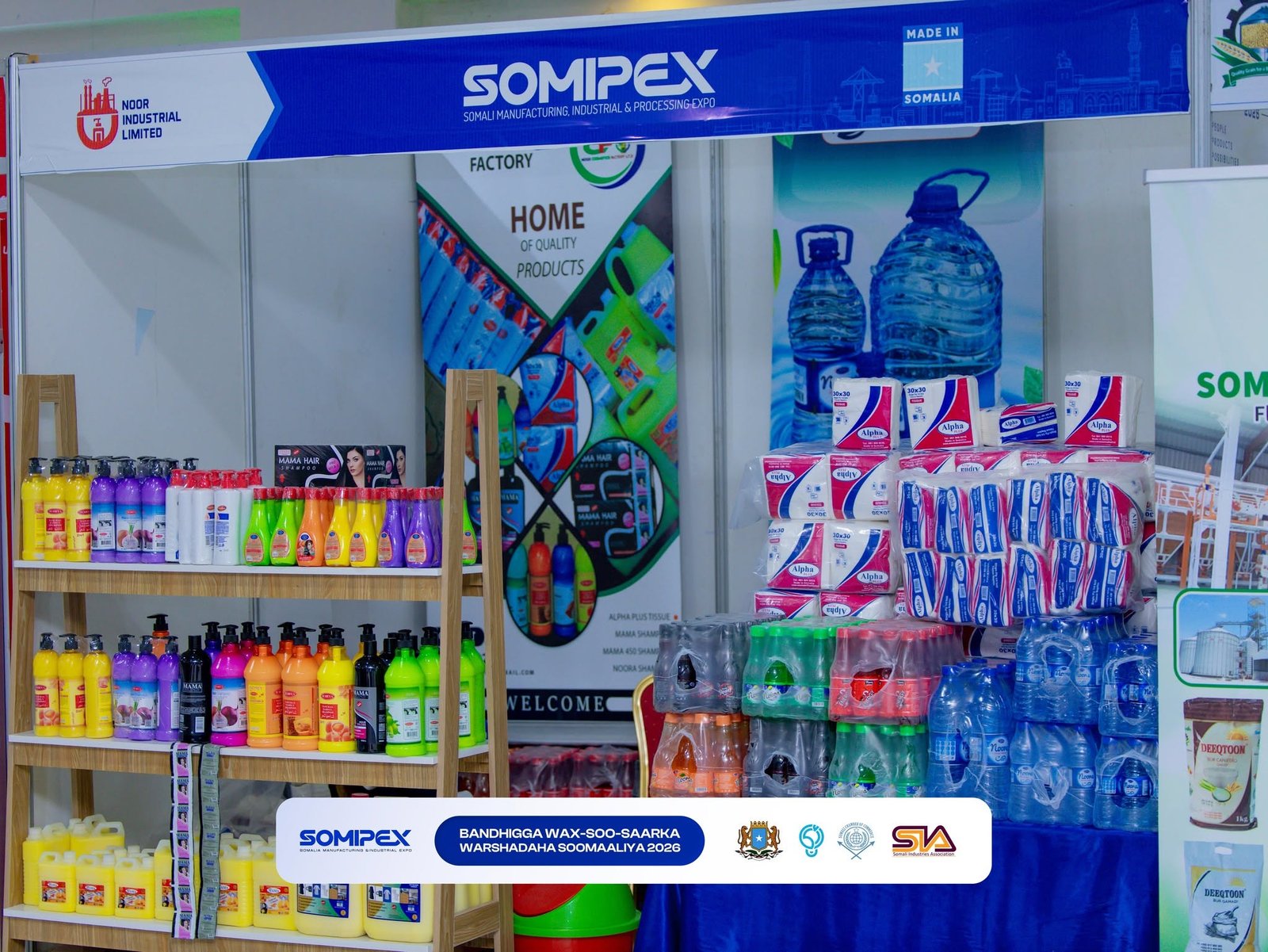
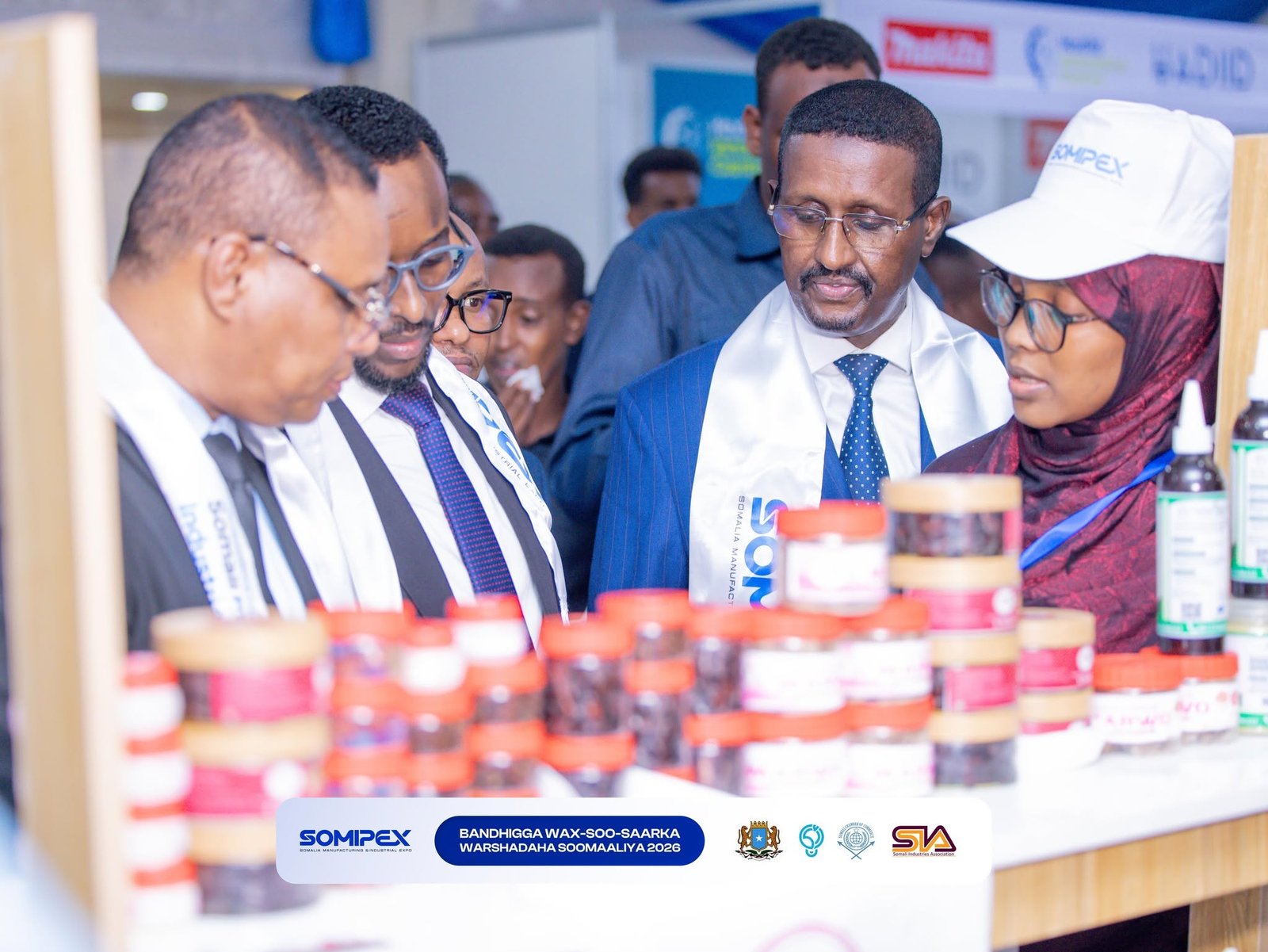
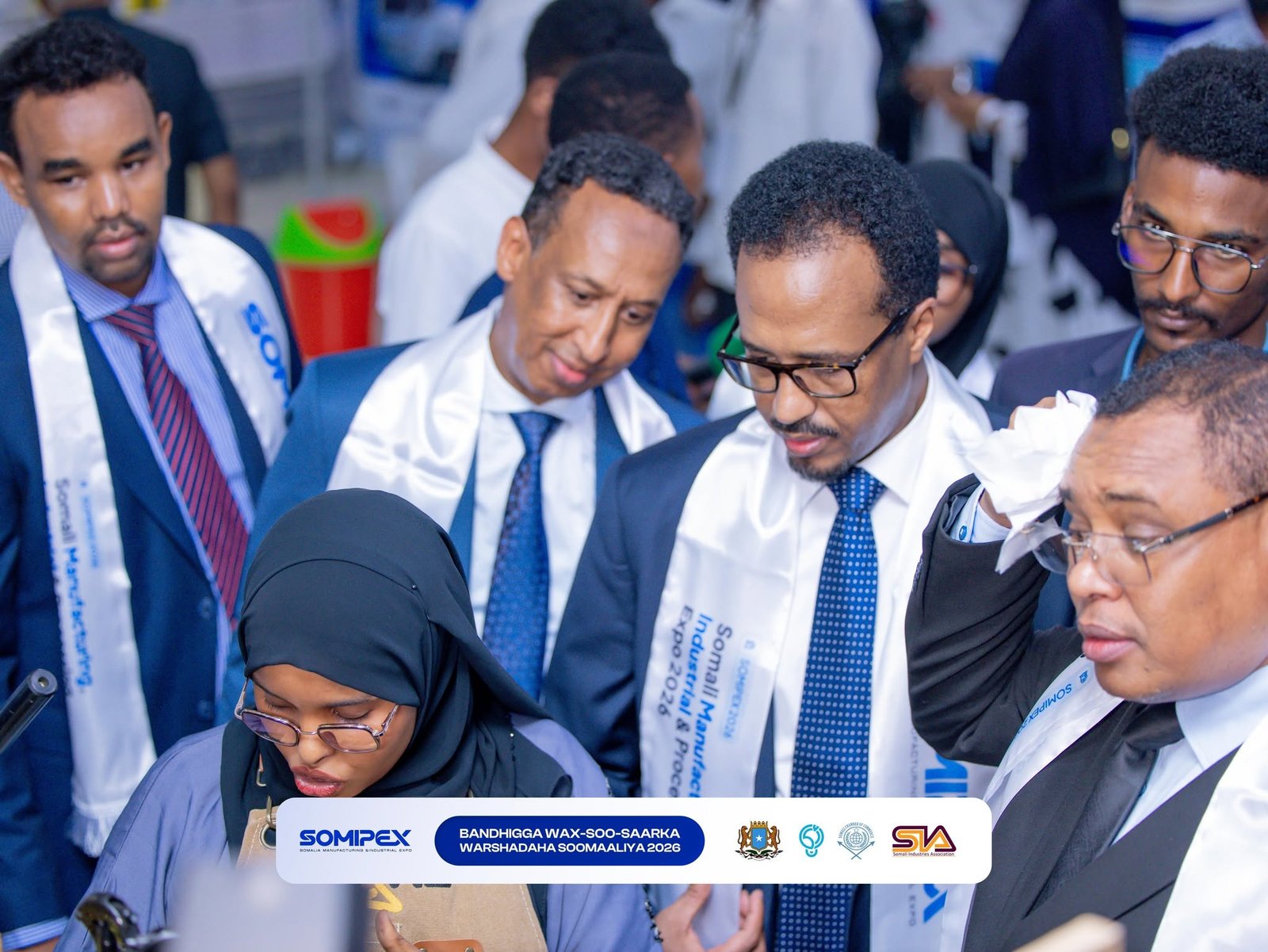

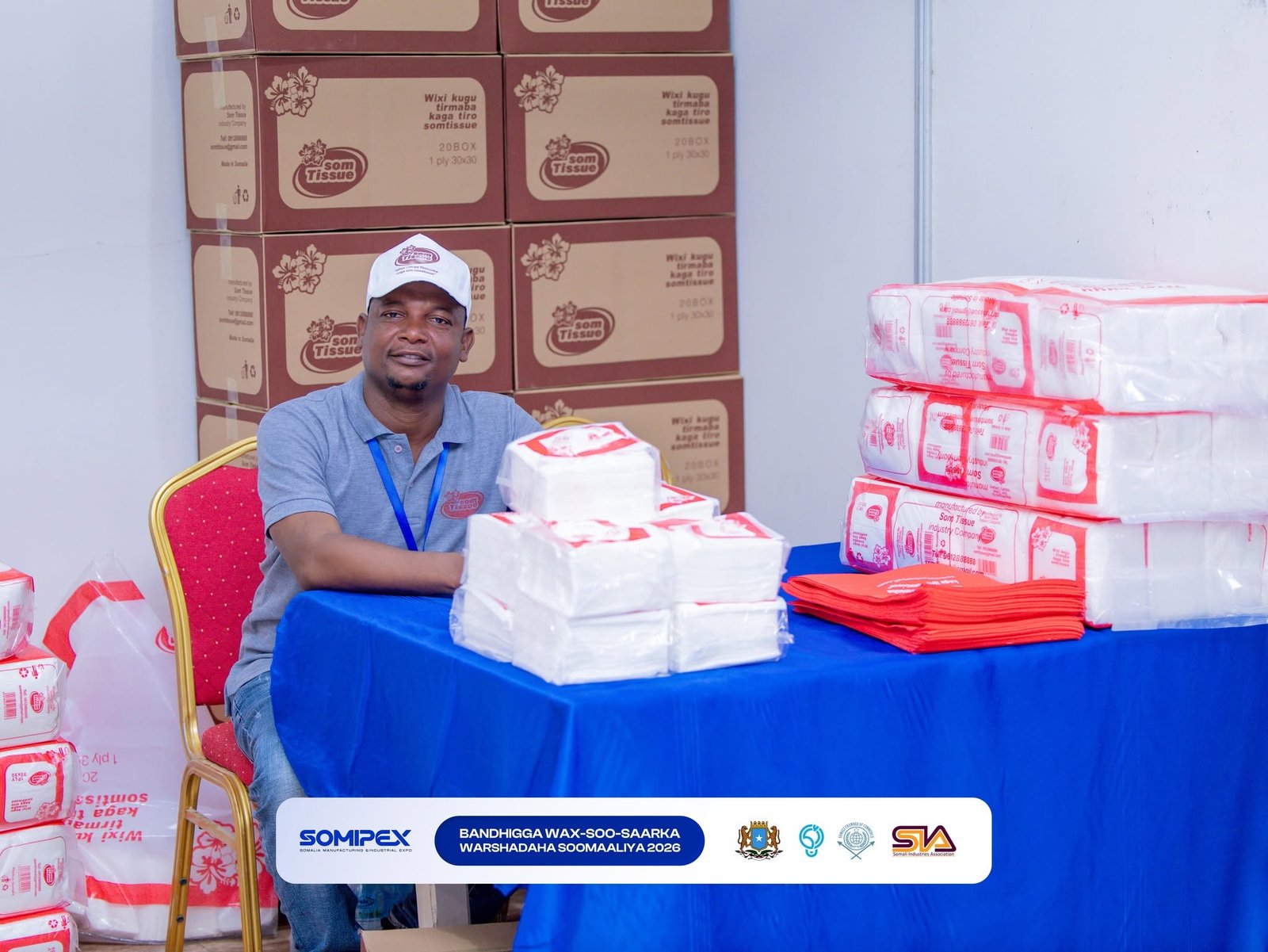
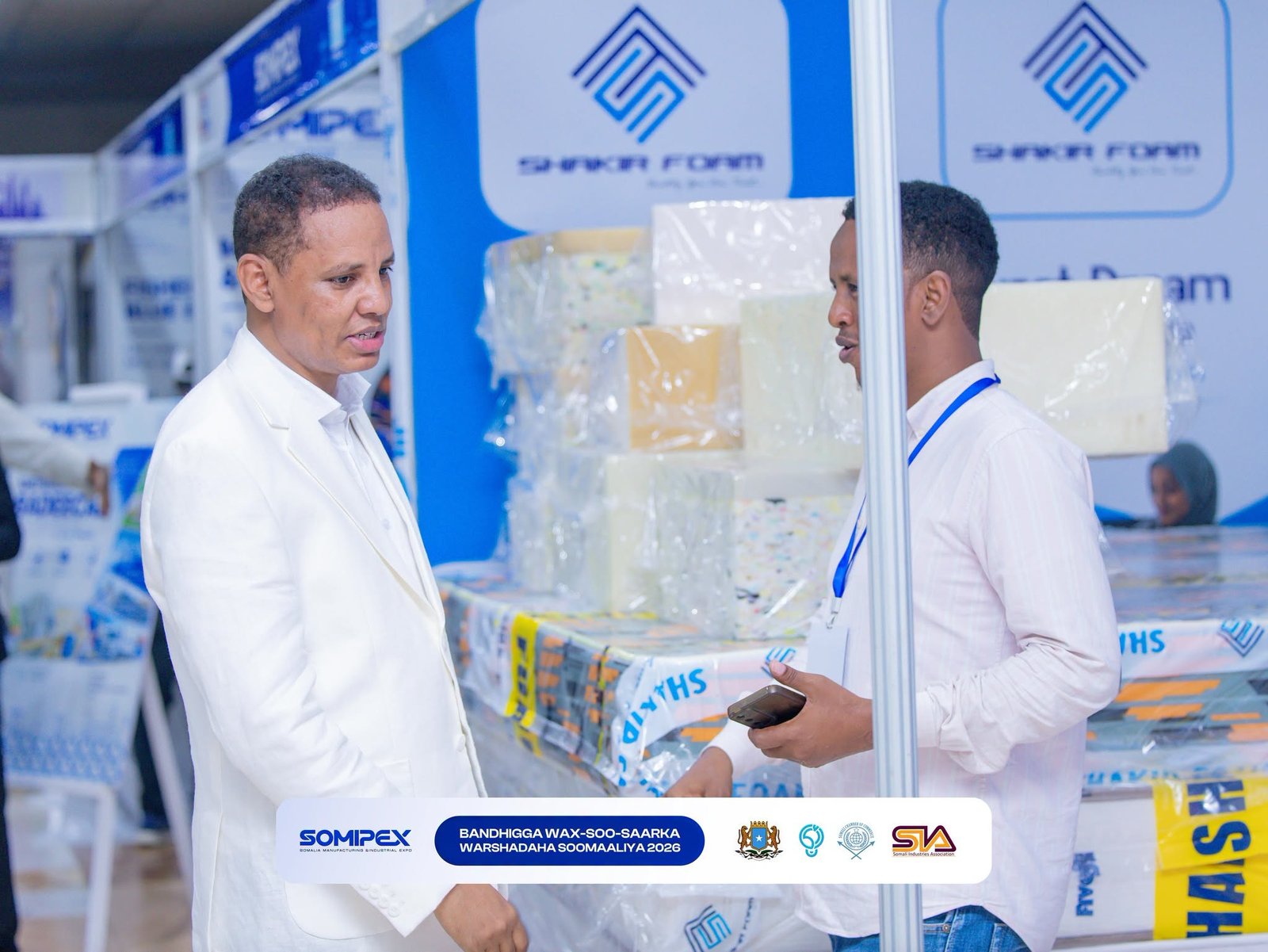

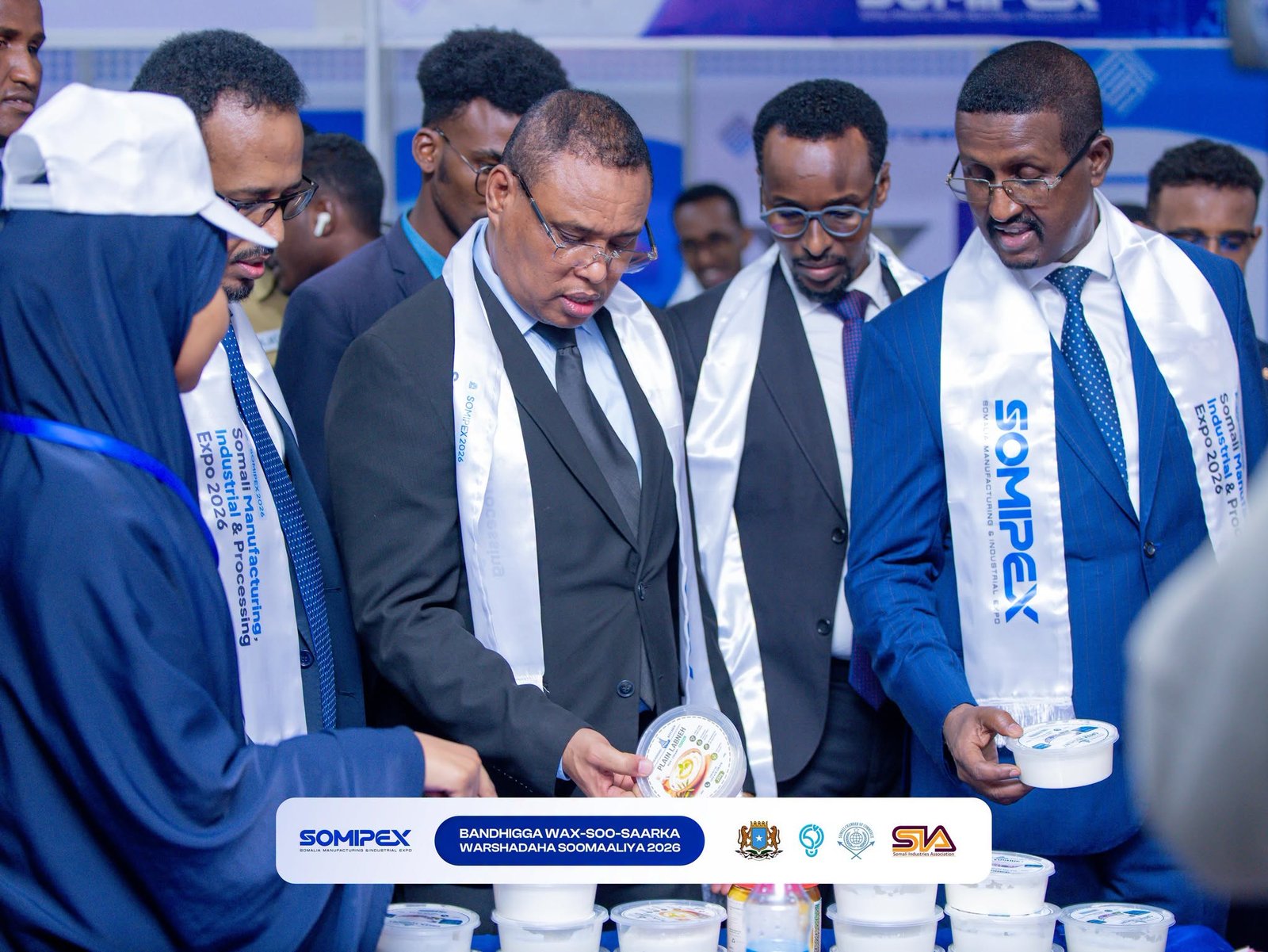
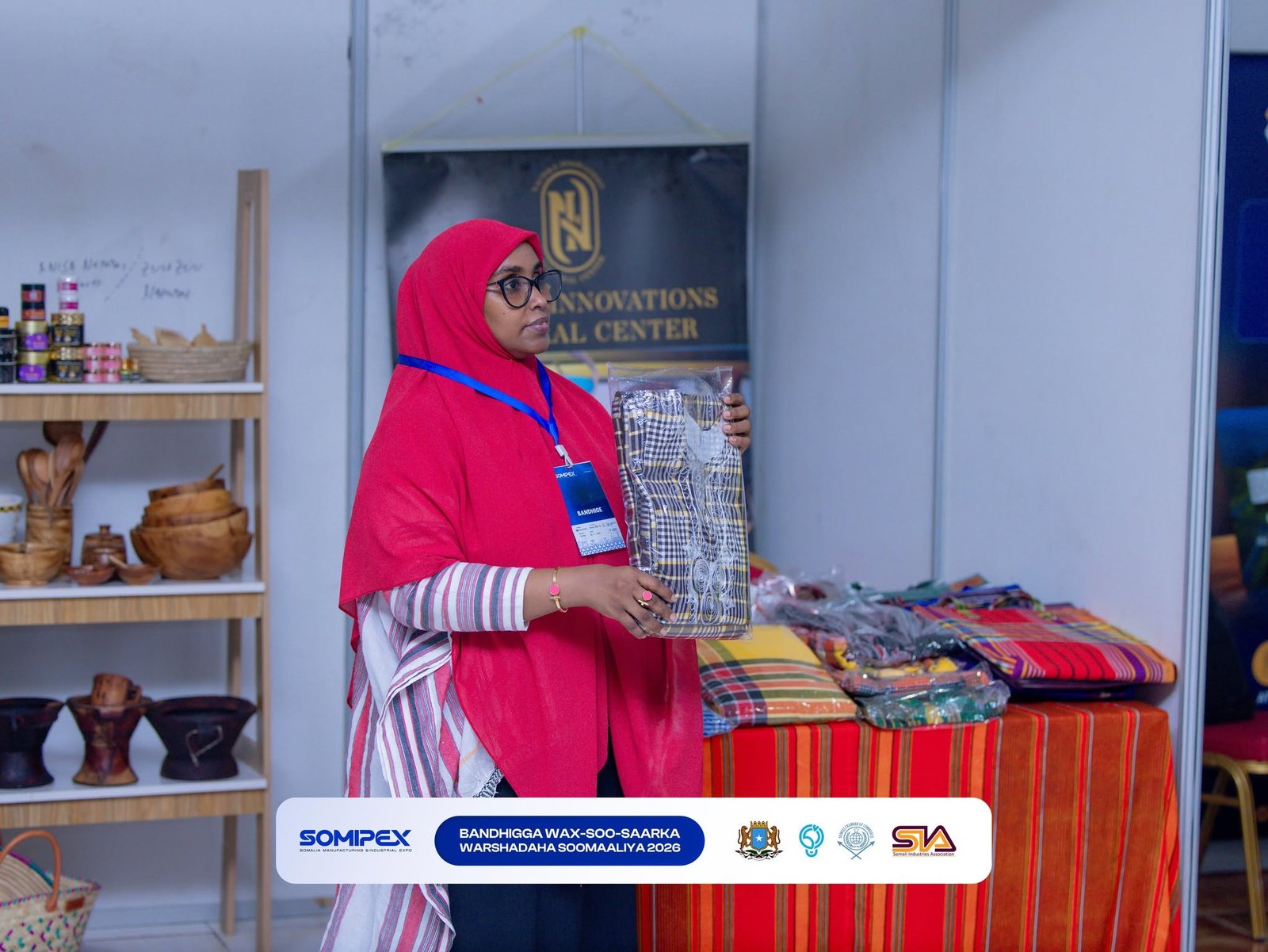
The exhibition floor brought products, producers and prospective business partners into one setting. For manufacturers, this visibility can lead to new retail relationships, distribution agreements, investment conversations and stronger public recognition.
Customers normally encounter a finished product on a supermarket shelf, in a pharmacy or at a construction outlet. SOMIPEX helped reveal the wider enterprise behind that product: the employees who operate the machinery, the technicians who maintain it, the designers who develop its packaging and the distributors who move it into the market.
Each locally manufactured product therefore represents more than a transaction. It supports a network of jobs and business services extending beyond the factory.
The event also introduced the Made in Somalia identity as part of a wider effort to recognise and promote locally produced goods. This initiative can become particularly valuable if it helps customers identify Somali products while encouraging manufacturers to maintain dependable standards of quality, presentation and supply. (Goobjoog News)
“A product made locally carries the contribution of factory workers, suppliers, designers, transporters and retailers.”
Finance meets the factory floor
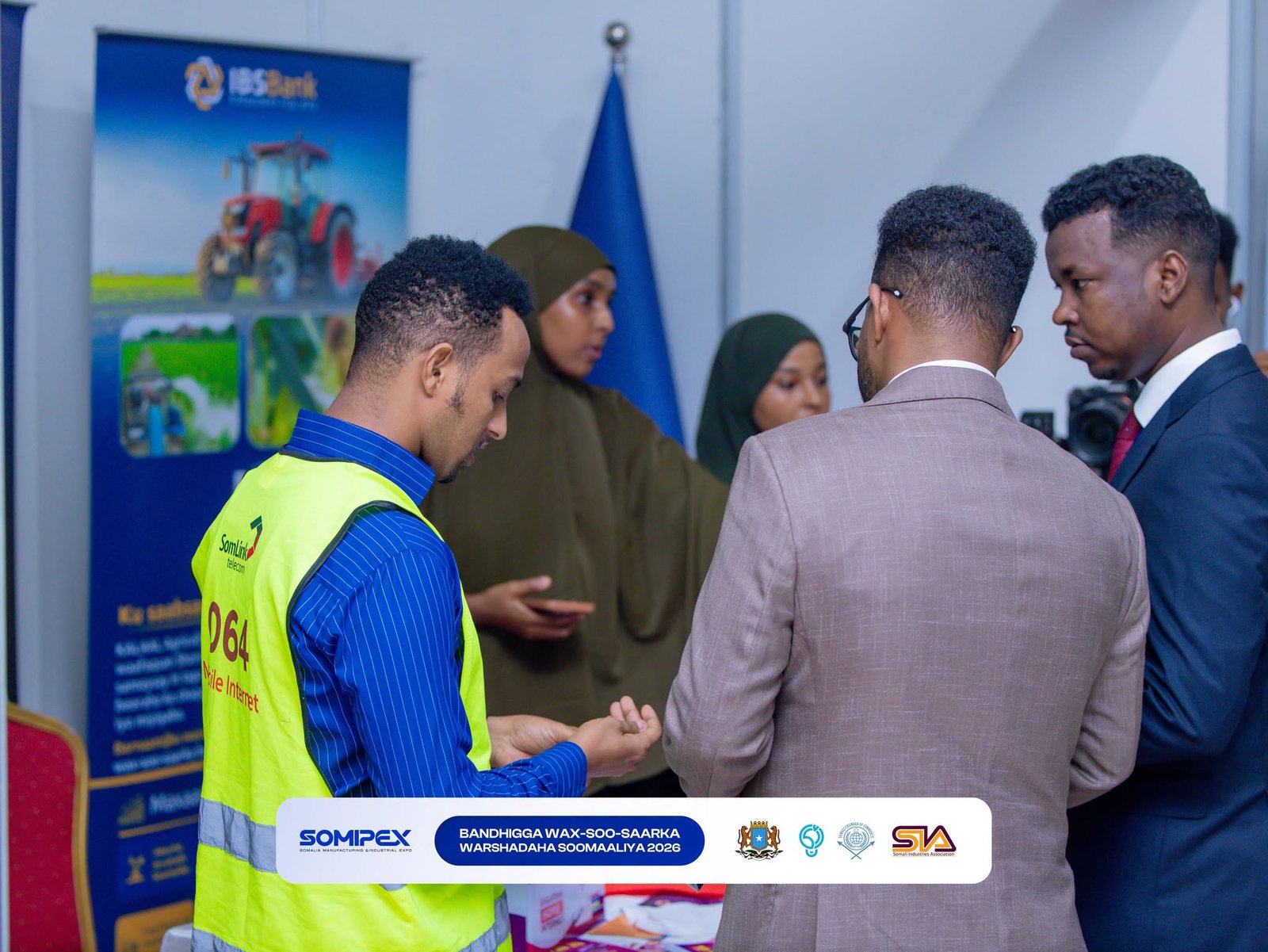
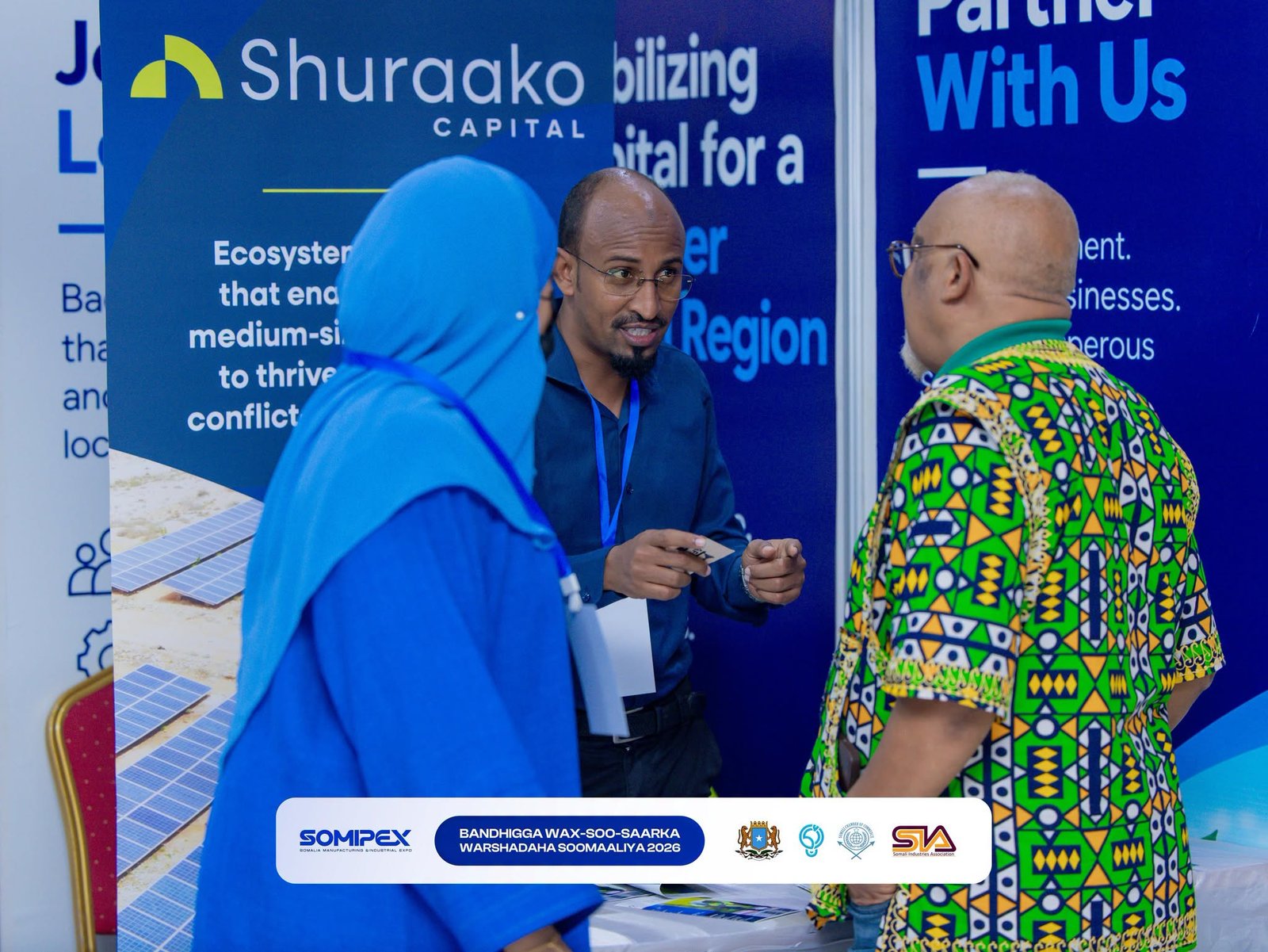
The Somali Industrial Association, the Ministry of Commerce and Industry and Arkan were among the organisations involved in delivering the event. Shuraaqo participated as the main sponsor, with IBS Bank and Hormuud Magan also supporting the exhibition.
Their involvement demonstrated the importance of connecting manufacturing with finance and business services.
Industrial companies often require more patient forms of capital than ordinary trading businesses. A manufacturer may need to acquire machinery, import inputs, train employees and maintain production for several months before receiving revenue from the finished goods. Banks and investment organisations therefore play an important role in helping viable factories manage this longer commercial cycle.
An exhibition such as SOMIPEX gives financial institutions a closer view of industrial operations. Instead of considering production only through an application form, financiers can meet factory owners, inspect products and understand the markets those businesses intend to serve.
For manufacturers, these conversations provide an opportunity to explain how financing would be used and how additional capacity could translate into production, employment and sales.
Local production with wider economic value

Somalia will continue to depend on international trade, but stronger local manufacturing can create a healthier relationship between imports and domestic production. The aim is not to manufacture every product inside the country. It is to identify areas in which Somali businesses can produce competitively, satisfy local demand and eventually reach regional markets.
The Ministry of Commerce and Industry has identified areas such as agro-processing, textiles, construction materials, pharmaceuticals, information technology and renewable energy among Somalia’s industrial priorities. These sectors can create opportunities for businesses of different sizes. (Industrial Policy—Ministry of Commerce and Industry)
Agro-processing can create markets for farmers while supporting packaging, storage and transport businesses. Construction-material production can serve the country’s expanding property and infrastructure sectors. Pharmaceutical production can develop technical expertise while improving access to essential goods. Textile manufacturing can create work across design, production and retail.
Growth in these areas would allow more of the value generated by Somali consumption to circulate through Somali companies, employees and suppliers.
What must follow the exhibition
SOMIPEX succeeded in bringing industrial activity into public view, but its lasting value will depend on the relationships developed after the exhibition.
The next stage will take place through factory visits, financing discussions, supply negotiations and follow-up meetings between manufacturers and government institutions. Companies will need to turn the attention created by the event into reliable products, stronger distribution and consistent customer service.
Public institutions can build on the momentum by simplifying industrial procedures, strengthening quality infrastructure and maintaining regular dialogue with manufacturers. Financial institutions can develop products that reflect the operating cycle of factories. Business associations can help companies share experience, identify common challenges and enter new markets.
Future editions of SOMIPEX could also introduce organised buyer meetings, technical sessions on standards, industrial finance clinics and awards based on independently assessed quality or innovation. These additions would strengthen its role as both an exhibition and a marketplace.
SOMIPEX 2026 has already achieved something important: it has shown manufacturers that their work belongs in the centre of Somalia’s economic story.
The products exhibited at Royal Palace Hotel represented investment, practical skill and confidence in the country’s productive future. They also delivered a clear message. Somalia’s next stage of business growth will not be built through trade alone. It will also be shaped by companies that manufacture, process, package and create value at home.
“The exhibition has ended, but the more important work begins when its introductions become investments, supply agreements and jobs.”


















Leave a comment